Let me tell you about my hobby. It is napping. I am exceptional at it. Like, if napping were an Olympic Sport, I could medal in it, without question.
🎧 Listen to this article in Alysse’s voice
👉 Prefer listening? Press play and follow along.
Most people “lie down for a bit.” I run a full production. Door shut. Black-out curtains shut. Lights off. Face mask on. Chubby Boston Terrier by my side. Phone face down somewhere, I cannot reach it, see it, or hear it. Then I check out of the world for an hour like a woman with somewhere very important to not be. I have been doing this religiously since the COVID years, at least five days a week, and it hands me a second wind in the late afternoon that I refuse to apologize for.
I am, by my own diagnosis, a sleepaholic. It is the only -aholic I am proud of. Actually, I’m a proud Claudaholic too, you can read more about that here.
Here is the thing nobody warns you about when you put down the drink: You have to learn how to sleep again. Sober.
Sleep is recovery infrastructure
For most of my drinking life, “sleep” was just the thing that happened when the lights went out on me. That is not rest. That is a blackout with better branding.
When you stop drinking, the body sends an invoice. One of the first charges on the bill is your sleep. And the research on this is not subtle.
A 2020 review in Neuropsychopharmacology Reports found that insomnia after people quit drinking can stick around for weeks, months, even years. The authors gave it a name: insomnia associated with alcohol cessation. Translation: The bad sleep is not in your head, and it does not always pack its bags at day 30.
It also is not just an early-sobriety problem, which is the part I want my fellow long-timers to actually hear. This can be a year-seven, year-17 situation too.
And it matters more than “I’m tired.” In a study published in the American Journal of Psychiatry, 60% of people who had insomnia before alcohol treatment relapsed within five months. For people without insomnia, that number was 30%. Bad sleep nearly doubled the odds. (I read that statistic and felt very validated about my blackout curtains.)
So when I say napping is a hobby, what I really mean is that sleep is part of how I stay sober. It is not a luxury and it is not lazy. It is maintenance on the machine. You already did the hard part. This is just keeping the lights on.
Which brings me to my new sheets.
Enter Rest, and the unboxing that made me gasp
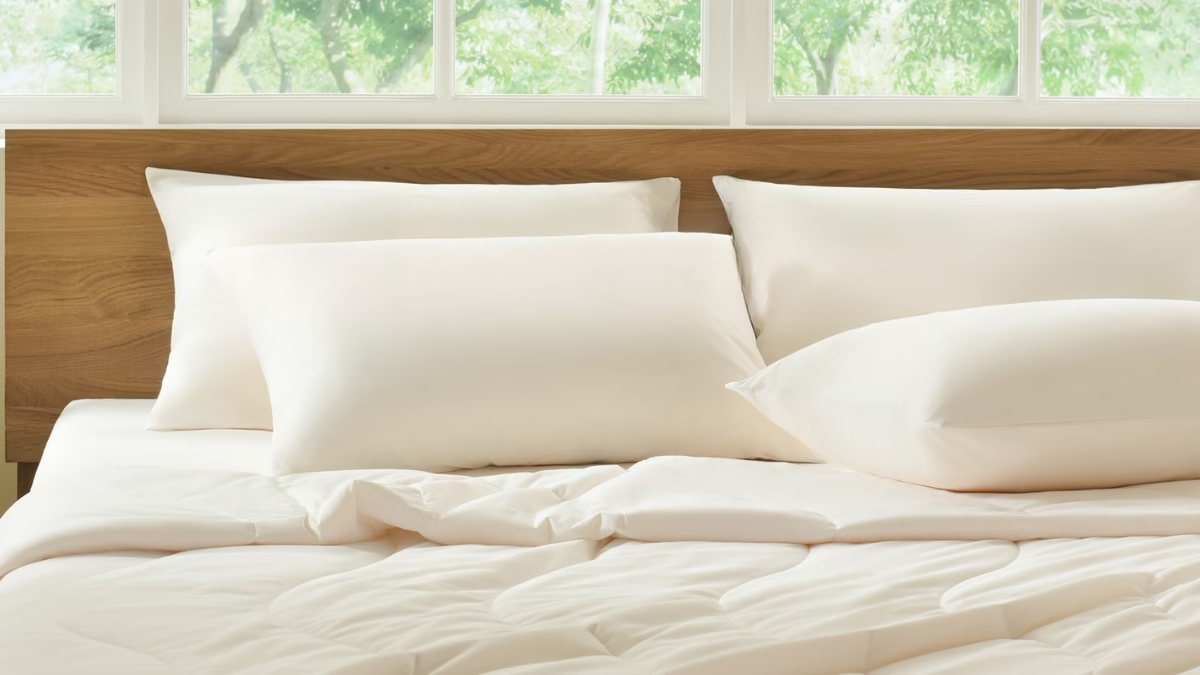
Rest sent me their Evercool starter set to try: a fitted sheet and two pillowcases. I opened the box, pulled out the fabric, and made a noise I usually save for when I find out a show I love got renewed. (I’m looking at you, Running Point Season 2.)
It is cool to the touch. Actually cool. Not “breathable cotton” cool, not “we slapped the word cooling on the label” cool. You touch it and your hand goes, oh.
The closest thing I can compare it to is a certain athleisure shirt I own, the kind that is somehow both buttery and a little bit cold, the one I keep reaching for in the closet even when I have nicer options. That is the sheet. Rest calls the fabric Evercool, and the science holds up: It has a Qmax rating of 0.40, which measures how cool a fabric feels the instant it hits your skin, and that makes it about twice as cool as silk. The fibers are 75 times thinner than a human hair, so the whole thing glides instead of drags. (And yes, I did totally nerd out in the science section of their website.)
I run hot. I have always run hot. And if you are a woman anywhere in the midlife zone where your internal thermostat has quietly filed for independence, you know the exact 3 a.m. sweat I am describing. The fabric is also knitted with a self-cleaning silver yarn that fights odor and bacteria, which reads like a gimmick right up until you are someone who sweats through bedding and very much needs it to stay fresh.
I am cold-blooded by preference. I want to sleep in a meat locker with good mood lighting. These sheets get me there.
The real review: I bought more with my own money
Here is the only product-review metric I trust.
The morning after my first night on the Evercool fitted sheet, I woke up genuinely rested, got online before coffee, and ordered the top sheet and two more pillowcases. With my own card. That is the tell. A brand can send me a sample. A brand cannot make me reorder at full price before I have had caffeine.
Full disclosure, because we do not do sneaky around here: Rest gifted me the starter set. Everything after that, I paid for, because I wanted it.
Now I am eyeing the rest of the collection like it owes me money. The comforter. The pajamas. The sleep mask. Give me all of it. I have a hobby to fund.
The sober pop culture footnote
One more thing, because I cannot help myself. Rest is famously beloved by Drew Barrymore, who quit drinking in 2019 and has been refreshingly honest about it. She has said she does not call herself sober and does not work a program. She just has not had a drink in years. Different label, same club. We hold space for all of it here.
I love that a brand built around getting actual rest found its celebrity match in a woman who got her sleep, her mornings, and her life back after she put the glass down. The Venn diagram of “people obsessed with good sleep” and “people who stopped drinking” is closer to a circle than the wellness industry likes to admit.
The whole world is suddenly precious about sleep. Oura rings, sleep scores, the entire internet whispering about magnesium. We were early. We had to be. Sleep was never a trend for us. It is the floor everything else stands on.
So yes. I nap five days a week, I sleep like it is a competitive sport, and I now do it on sheets that feel like a cold compress for the entire body. Peace with a pulse, and an excellent thread count.
You did the hard part already. Order the sheets and go take a nap. You can thank me later once you’re well rested.
Disclosure: Rest gifted the Evercool starter set for this review. Every additional purchase, and every opinion here, is my own.
Sources:
- Roehrs, T. et al. “Current and potential pharmacological treatment options for insomnia in patients with alcohol use disorder in recovery.” Neuropsychopharmacology Reports, 2020.
- Brower, K. et al. “Insomnia, Self-Medication, and Relapse to Alcoholism.” American Journal of Psychiatry, 2001.
- Product specifications: Rest, rest.com (Evercool and Evercool+ cooling bedding).
More Curated Articles on Sleep + Recovery
- Why Adults Need Bedtime Routines: More Than Just Child’s Play
- Sober Sweat: Melatonin-Rich Foods for Sleep
- The Power of Couples’ Sleep and Recovery Rituals: Healing Together, Resting Better
- Best Apps for Building Healthy Habits: Nutrition, Sleep, and Mindful Movement
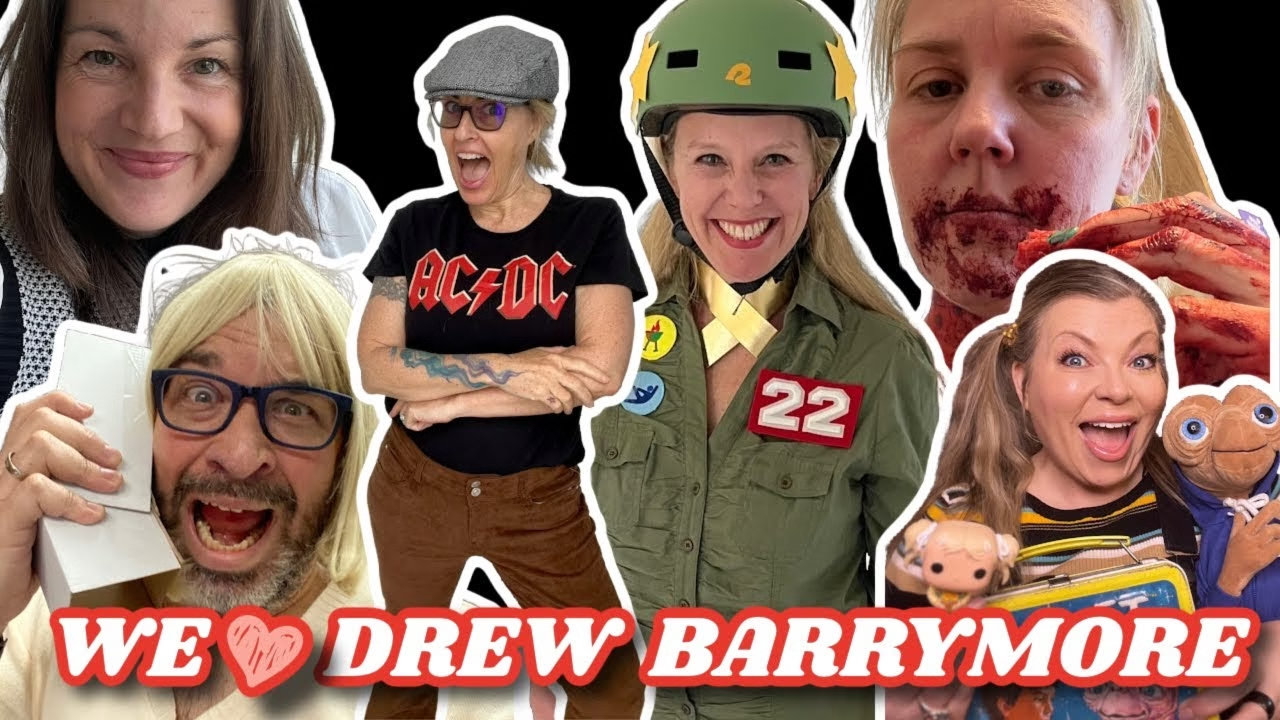
SOBER POP CULTURE: An Open Invitation to Drew Barrymore to Become a Sober Curator

SOBER POP CULTURE: Sober Celebrities Who Opened Up on The Drew Barrymore Show
Why can’t I sleep after quitting drinking?
When you stop drinking, your body needs to relearn natural sleep patterns. Alcohol disrupts REM sleep and your brain’s natural sleep-wake cycle. Research shows insomnia after quitting alcohol can persist for weeks, months, or even years – this is called ‘insomnia associated with alcohol cessation’ and it’s completely normal during recovery.
How long does insomnia last after stopping alcohol?
Sleep issues after quitting alcohol vary by person, but research indicates they can last weeks, months, or even years. This isn’t just an early sobriety problem – sleep challenges can occur even years into recovery. The good news is that prioritizing sleep hygiene and rest can significantly improve your sleep quality over time.
Can poor sleep cause alcohol relapse?
Yes, studies show poor sleep significantly increases relapse risk. Research published in the American Journal of Psychiatry found that 60% of people with insomnia before alcohol treatment relapsed within five months, compared to 30% without insomnia. This makes addressing sleep issues a crucial part of maintaining sobriety.
What are the benefits of napping in sobriety?
Napping can be a powerful recovery tool in sobriety. Strategic afternoon naps help restore energy naturally, improve mood, and support your body’s healing process. Creating a proper nap routine – with blackout curtains, comfortable temperature, and limited distractions – can provide the quality rest your recovering body needs.
How do I create better sleep habits in recovery?
Focus on sleep hygiene fundamentals: maintain consistent sleep/wake times, create a dark, cool environment, remove electronic distractions, and consider strategic napping. Treat sleep as essential recovery infrastructure, not a luxury. Quality rest supports both physical healing and mental resilience in sobriety.
Is it normal to need more sleep when sober?
Absolutely. Your body is healing from years of disrupted sleep patterns caused by alcohol. What you thought was ‘sleep’ while drinking was often just passing out – not restorative rest. Needing more quality sleep in sobriety is your body’s way of catching up and properly recovering.
What is the difference between alcohol sleep and sober sleep?
Alcohol-induced sleep isn’t true rest – it’s more like a blackout that prevents deep, restorative sleep cycles. Sober sleep allows your brain to properly cycle through REM and deep sleep stages, leading to better memory consolidation, mood regulation, and physical recovery. Learning to sleep sober takes time but provides genuine restoration.