


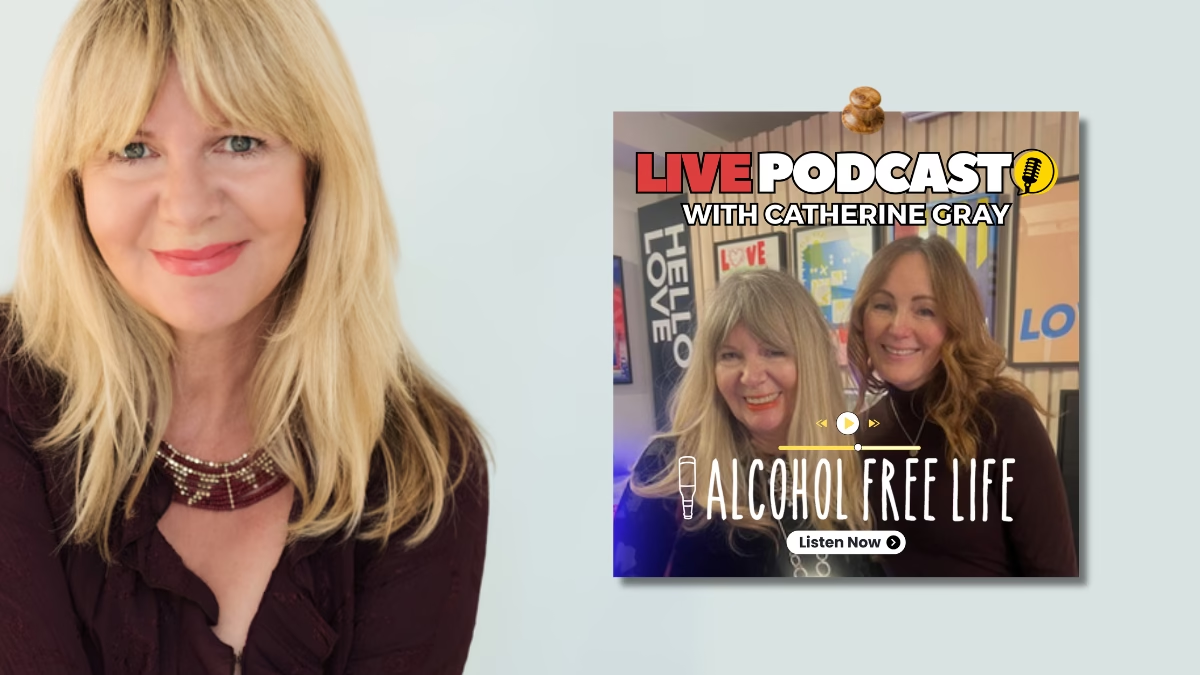

Our recent live Alcohol Free Life Podcast event with the brilliant Catherine Gray left me buzzing, and thinking, long after we wrapped. Catherine has that rare gift: she can talk about the hardest things with humour, honesty, and a kind of grounded vulnerability that makes everyone in the room exhale.
We spoke about the extraordinary success of “The Unexpected Joy of Being Sober”, a book that didn’t just sell, but shifted culture. Catherine reminded us that when she wrote it, she had no idea it would resonate so widely. She simply told the truth. And people recognized themselves in it.
That’s the power of vulnerability. It’s also the power of naming what we’re really dealing with.
Catherine’s new book, “Little Addictions”, digs into the habits we brush off as ‘just how I am’, the ones that don’t look dramatic from the outside, but quietly shape our lives.

She challenged us, gently but firmly, to look at the things we reach for when we’re overwhelmed, lonely, bored, anxious, or trying to avoid discomfort.
She calls them “Tiny but mighty compulsions.”
And she’s right. Some of the most powerful addictions are the ones we don’t even name. Catherine identified several “sticky” addictions , the kinds of compulsions that don’t look dramatic from the outside, but quietly shape our lives. Things like people‑pleasing, phone use, micro‑spending, sugar, and the constant pull toward approval.
When she said “People‑pleasing is a tiny but mighty compulsion,” the whole room nodded.
People‑pleasing is a tiny but mighty compulsion.
Catherine Gray
I’ve seen this so many times with clients, people who go back to drinking not because they want to, but because they don’t want to upset someone else. A partner. A friend. A family member. A colleague.
Catherine’s research found that we are, at our core, tribal. We don’t want to rock the boat. We don’t want to be “the difficult one.” We don’t want to be the person who says no. I used to be terrible at setting boundaries, and I thought that anyone who did, was simply mean! Over time, sobriety taught me that:
Boundaries are not rejection. Boundaries are protection.
Protection of your peace. Your sobriety. Your wellbeing. Your identity.
We discussed that being sober makes you brave, and if you ARE a people‑pleaser, harness that bravery.
“Sometimes the bravest thing you can do is disappoint someone.”
Because so many of us, especially those who’ve struggled with alcohol, anxiety, or perfectionism, have been trained to keep everyone else comfortable, even at the cost of our own wellbeing.
But recovery, growth, and self‑respect all require the same thing:
The willingness to choose yourself.
Even when it’s awkward. Even when it’s inconvenient. Even when someone else doesn’t understand.
Why is it so hard to put yourself first?
People‑pleasing isn’t a personality quirk. It’s a survival strategy, one many of us learned early. Psychologists call it ‘appeasing behaviour’, and it’s deeply wired. When we sense conflict, disapproval, or tension, our nervous system tries to keep us safe by smoothing everything over.
Here are a few truths that help explain why it feels so hard:
- People‑pleasing activates the same reward pathways as other addictions
Every time you say yes, avoid conflict, or make someone else happy, your brain gives you a tiny hit of dopamine. It feels like relief, but it’s short‑lived.
- Studies show that around 70% of adults identify as “highly approval‑sensitive”
This isn’t a niche issue. It’s a human one.
- Appeasers often grew up in environments where being “easy” kept the peace
So the behaviour becomes automatic, even when it harms us.
- People‑pleasers are more likely to relapse
Not because they lack willpower, but because they fear disappointing others.
A powerful quote to hold onto:
“When you avoid conflict to keep the peace, you start a war inside yourself.” (Author unknown)
Tips for Putting Yourself First (Without Feeling Like a Terrible Human)
These are simple, gentle shifts, not overnight transformations.
1. Pause before you say yes
Buy yourself time. Try: “Let me check and get back to you.”
2. Notice the physical signs
Tight chest? Sinking stomach? That’s your body saying: “This isn’t right for me.”
3. Start with micro‑boundaries
You don’t need to begin with the big stuff. Try:
- Not replying instantly
- Leaving a WhatsApp group
- Saying no to something small
4. Practise disappointing people
It sounds odd, but it’s liberating. Not everyone will like your choices. That’s OK.
5. Remember the cliché that’s actually true
You can’t pour from an empty cup. You can’t support others if you’re depleted, resentful, or running on fumes.
6. Ask yourself: “What would I tell a friend?”
We’re always kinder to others than to ourselves.
7. Surround yourself with people who get it
This is the game‑changer. When you’re in a community where boundaries are normal, sobriety is celebrated, and self‑respect is encouraged, everything becomes easier.

Connection is the Antidote
As Catherine and I chatted in that live podcast recording with a room full of people who were nodding along, it became clear that the opposite of these “little addictions” isn’t willpower, it’s connection.
Connection to yourself. Connection to others who get it. Connection to a community where you don’t have to perform or pretend.
That’s why I created The Sober Club, because sobriety, boundaries, and emotional freedom are so much easier when you’re surrounded by people who understand the journey.
If Catherine’s work shows us anything, it’s that we’re not meant to do this alone.
If you recognised yourself in any of those “sticky” addictions…
If you’re tired of people‑pleasing… If you want to build boundaries without guilt… If you want to explore sobriety and level up your wellbeing… And Don’t even get me started on phone use!
Get Connected. Find others who will cheer lead you!
Listen to the Alcohol Free Life podcast on any platform www.thesoberclub.com
Janey Lee Grace is a presenter, best-selling author, and founder of The Sober Club, and trains others to be Sober Coaches.
#QUITLIT BOOK REVIEW: “The Unexpected Joy of Being Sober” by Catherine Gray

#QUITLIT Book Review: The Unexpected Joy of Being Single by Catherine Gray
Sobriety Rocks – Who Knew! | Janey Lee Grace

RECOVERY PODCASTLAND & NETWORK at The Sober Curator is your audio haven for all things sobriety and recovery. We’re your bee-zy sober podcast enthusiasts, curating the best shows that educate, inspire, and entertain in the alcohol-free space.
Our archives are neatly organized so you can easily explore Recovery Podcastland—featuring our favorite recovery-based podcasts from across the globe—and the TSC Podcast Network, where we share our own original shows on sober lifestyle, pop culture, travel, entertainment, and more.
Whether you’re seeking practical recovery tips, personal stories, or uplifting inspiration, this is your go-to listening guide.
TSC LIBRARY: Welcome to The Sober Curator Library! This isn’t your average stack of books—we’re talking full-on story immersion, Audible binges, and reviews with personality. Browse our four go-to genres: #QUITLIT, Addiction Fiction, Self-Help, and NA Recipe Books. And if you’re collecting recovery reads like rare trading cards, check out our Amazon #QUITLIT list—Early Sobriety Survival: Books for Your First 90 Days.
SOBERSCRIBE NOW!
Resources Are Available
If you or someone you know is experiencing difficulties surrounding alcoholism, addiction, or mental illness, please reach out and ask for help. People everywhere can and want to help; you just have to know where to look. And continue to look until you find what works for you. Click here for a list of regional and national resources.

Follow The Sober Curator on LinkedIn
What are “little addictions”?
“Little addictions” are everyday habits or compulsions—like people-pleasing, phone use, or sugar—that may seem harmless but can quietly shape behavior, emotional health, and decision-making.
How does people-pleasing affect sobriety?
People-pleasing can lead individuals to prioritize others’ comfort over their own wellbeing, increasing the risk of relapse. Many people return to drinking not out of desire, but to avoid disappointing others.
Why is it so hard to set boundaries in recovery?
Boundary-setting can feel difficult because people-pleasing is often a learned survival strategy tied to avoiding conflict or rejection. It’s deeply wired into behavior and reinforced over time.
Are people-pleasing behaviors linked to addiction?
Yes. People-pleasing can activate similar reward pathways in the brain as other addictive behaviors, offering short-term relief through approval or conflict avoidance.
How can you start setting boundaries without guilt?
Start small with “micro-boundaries,” such as pausing before saying yes, delaying responses, or declining low-stakes requests. Over time, these small shifts build confidence and self-trust.
Why are boundaries important in sobriety?
Boundaries protect your mental health, energy, and recovery. They allow you to prioritize your wellbeing without sacrificing your identity or values.
What is the connection between people-pleasing and relapse?
People-pleasers may relapse because they fear conflict or rejection. Saying yes to situations that don’t support sobriety can increase vulnerability, even when intentions are good.
What helps people overcome people-pleasing in recovery?
Connection is key. Being part of a supportive community where boundaries are normalized and sobriety is encouraged makes it easier to change behavior and build healthier patterns.
Why does connection matter in recovery?
Connection replaces isolation and reduces the need for coping behaviors. Supportive communities help reinforce healthy choices, making sobriety and personal growth more sustainable.