Let me paint you a picture of my desk right now.
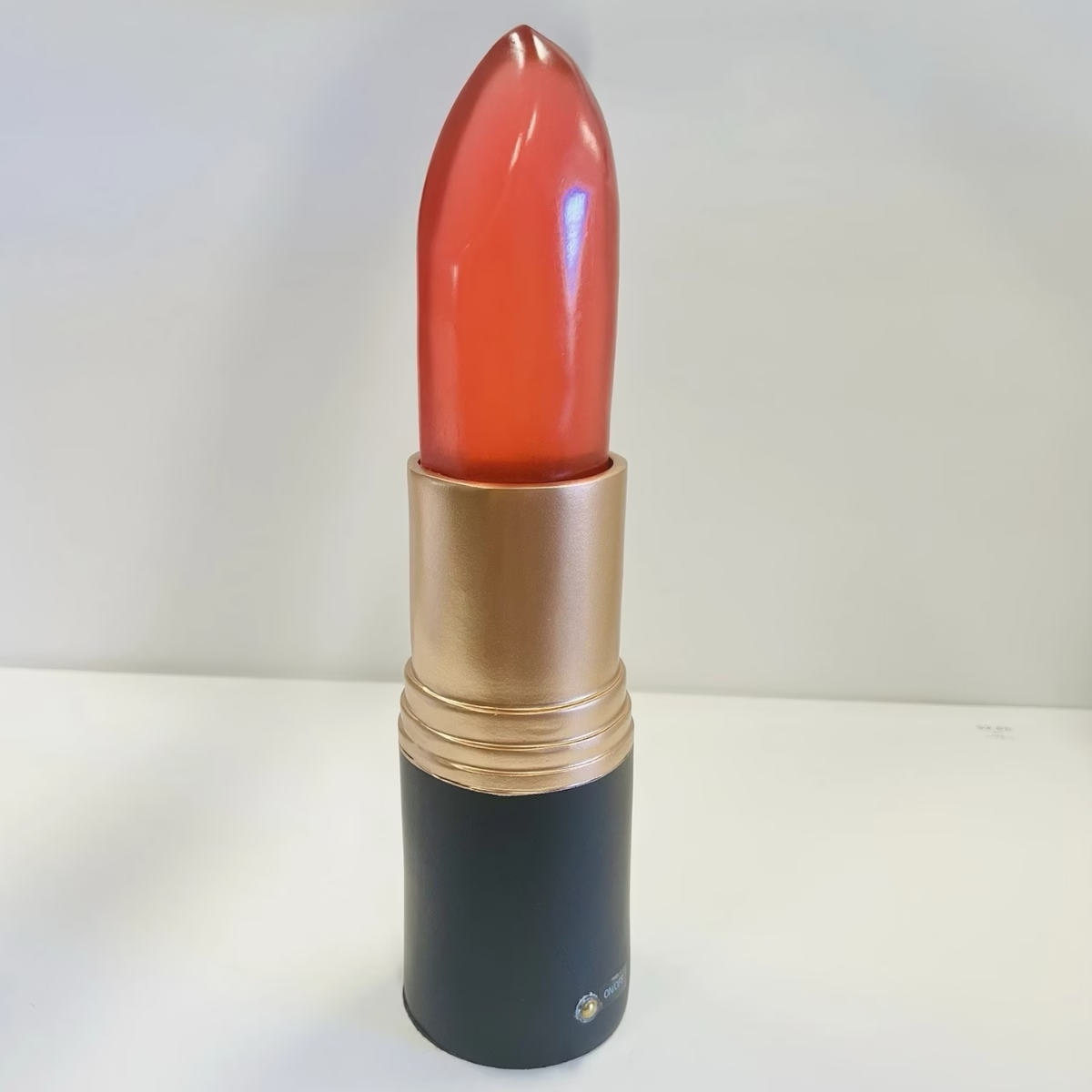
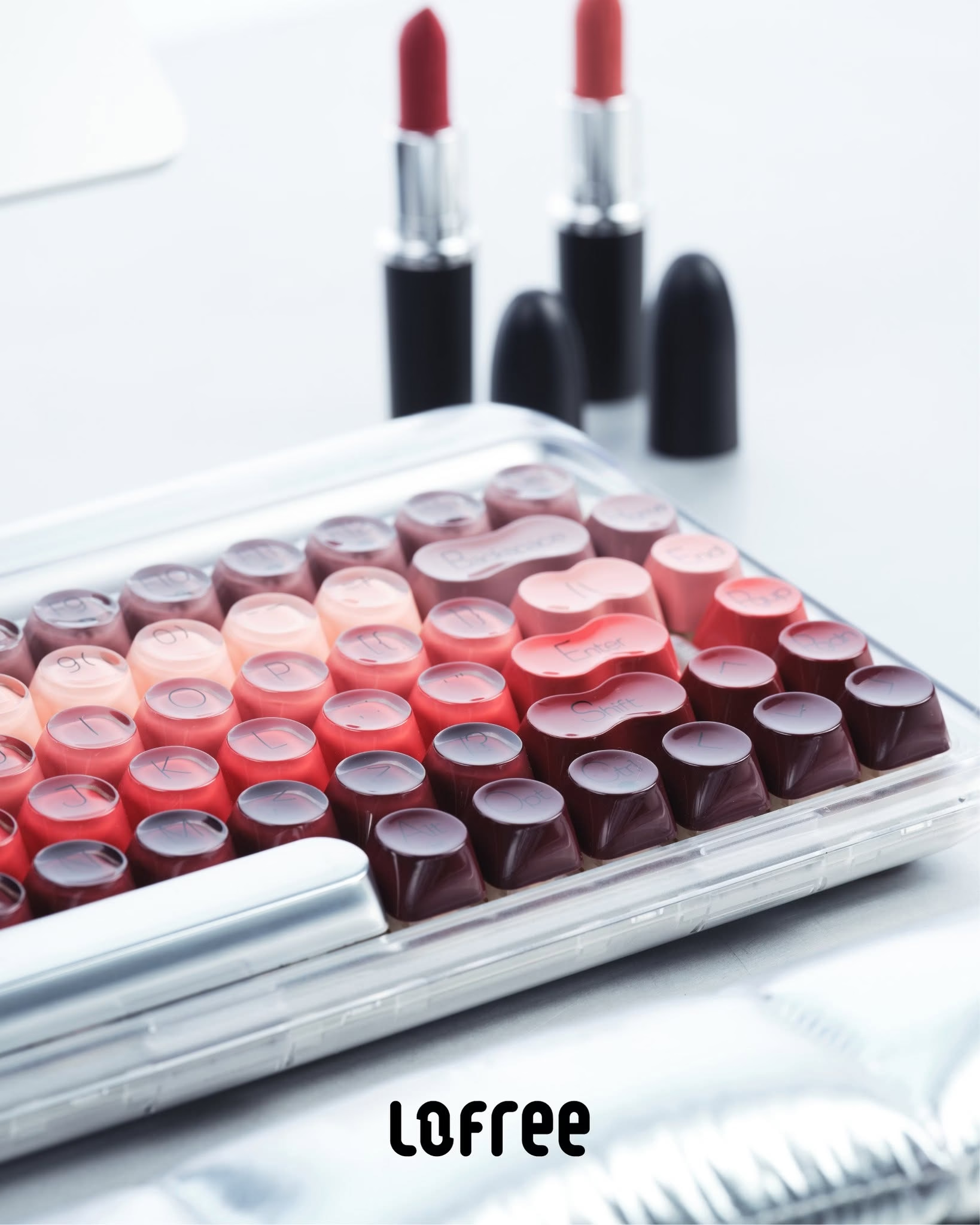
There is a Rachel Zoe lipstick lamp on the shelf. Red. Sexy. Sculptural. Absolutely unnecessary and entirely non-negotiable. My monitor is covered on the back with stickers I have collected on my travels and have been gifted by people and brands I love. There is a Diet Coke nearby, obviously. And sitting front and center, the thing that started this whole conversation, is the Lofree DOT Lipstick keyboard in a shade that makes me genuinely happy every single time I sit down.
I did not know I needed a keyboard that looks like it belongs in a Chanel flat lay until I had one.
Now I cannot imagine going back.
🎧 Listen to this article in Alysse’s voice
💄 Prefer listening? Press play and follow along.
The Keyboard
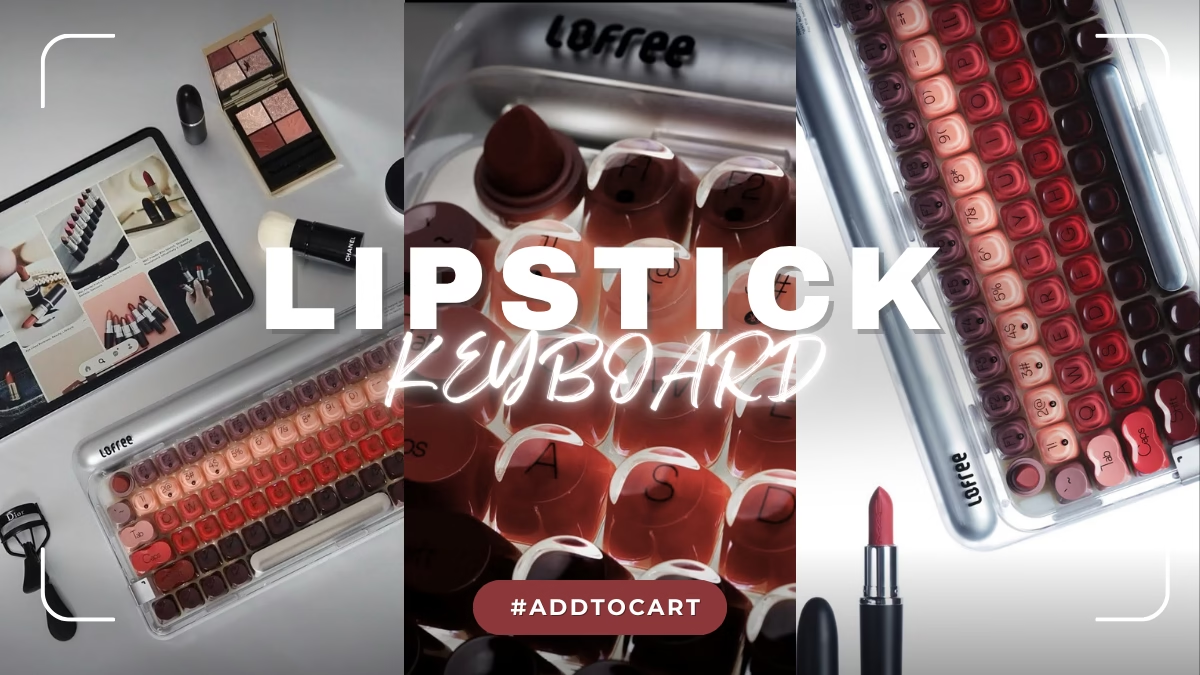
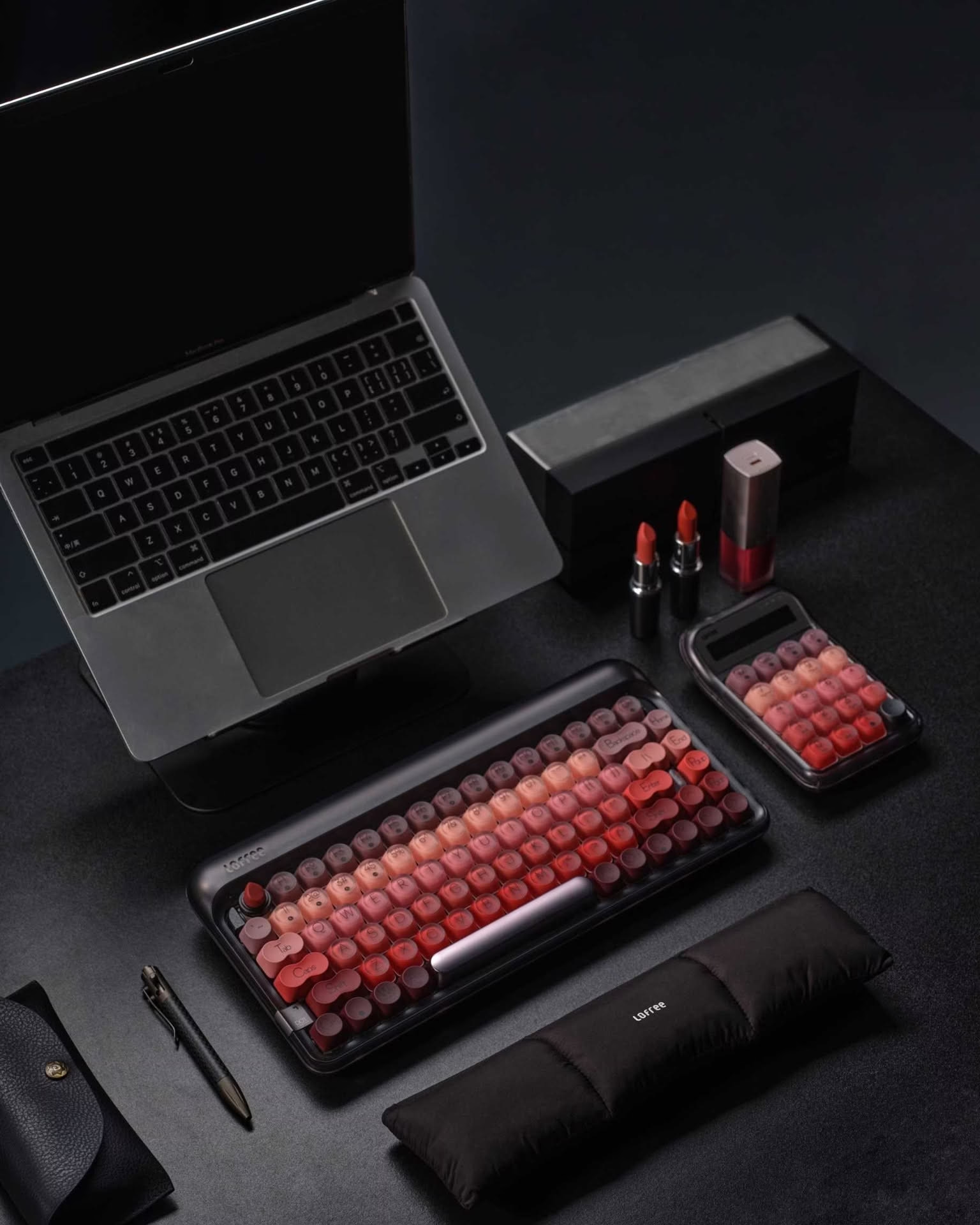
The Lofree DOT Lipstick Elegant Mechanical Keyboard is exactly what it sounds like and more than you would expect. It comes in eight lipstick-inspired colorways, the kind of decision that sounds gimmicky until you are holding it and realize the color matching is genuinely good. The ESC key is shaped like a lipstick bullet. Matte finish. The keycaps are dual-shot PBT, which means the backlighting hits differently than your standard keyboard because the translucency is built in, not an afterthought.
The technical specs are legitimately solid too, not just pretty packaging:
- Gasket mount design means the typing feel is soft and cushioned. No harsh clacking. No vibration fatigue after a long writing session.
- Hot-swappable GATERON linear switches let you customize the feel without needing to solder anything. You can change them out yourself.
- Three connection modes: 2.4GHz wireless at 1ms response, Bluetooth 5.0 with three-device pairing, and USB-C wired.
- 1000Hz polling rate with full anti-ghosting support. Zero input lag.
- 4000mAh battery with 14-day office use per charge, a smart power-saving mode, and automatic backlight shutoff when idle.
- Seven white backlight effects that sync with your typing rhythm and play beautifully off the silver-plated frame.
It pairs with my Rachel Zoe lipstick lamp in a way that feels completely intentional, like someone designed both products in the same mood board meeting. The whole corner of my desk has an energy now. Feminine, fun, maximalist in the best way, and wildly practical at the same time.
That combination is something I have been consciously building for years.
Why This Actually Matters (Especially for People in Long-Term Recovery)
Nobody tells you this part when you get sober. You do so much internal work that nobody warns you the external stuff counts too.
The space you walk into every morning. The desk you sit at. The lighting. The objects around you. Your environment is not neutral. It is either working for you or against you.
Here is why I think people in long-term recovery should take their workspace seriously.
1. You stopped white-knuckling your life. Stop white-knuckling your environment.
When you were in active addiction, survival mode was the aesthetic. Now that you are actually living, your surroundings should reflect that. A space that feels like you is proof that you get to have nice things.
2. Visual chaos creates mental chaos.
I am not talking about a Pinterest-perfect desk. I am talking about the stack of mail you have been stepping over for three weeks. The dead plant you keep meaning to throw away. The mug with the broken handle you use anyway because you have not gotten around to buying a new one. None of that is neutral. Your nervous system is clocking all of it, all day. You did not get sober to live in a space that feels like you are still just getting by.
3. You finally built a life you don’t need to escape from. Act like it.
There might be a version of your desk that has nothing personal on it. No color, no objects, nothing that said anyone in particular sat there. It is a surface you work at, not a place you belong to. The difference between those two things is not a matter of decoration. It is the daily decision to show up for the life you actually have.
4. Personalization activates ownership.
When you put your things in your space, you are claiming it. For people in recovery who spent years feeling like they had no right to take up space, that act is quietly revolutionary.
5. Sensory comfort reduces anxiety without substances.
Soft lighting. A candle. A mug you actually love. A keyboard in a color that makes you smile before you have typed a single word. These are nervous system regulation tools. They just happen to also be cute.
6. A curated space reinforces your identity.
For a long time, you did not really know what you liked. Not really. You knew what you drank. You knew what you needed to get through the night. But what you actually liked? That took years to figure out. So when you put something on your desk because it is yours, because it is weird or beautiful or makes you laugh, that is not decorating. That is you showing up for yourself in a very specific, very quiet way.
Because the back of my monitor is exposed, I covered it with stickers collected from travels and gifted by people and brands I love. It takes a boring surface and makes it art and a story.
7. It makes the hard days survivable.
Some days in recovery are just heavy. Not crisis-level. Just heavy. A workspace that feels like home to your soul gives you a soft place to land.
8. Dopamine hits are available without alcohol.
Your brain still needs reward signals. A beautiful object on your desk. A plant you kept alive. A photo that makes you smile. A keyboard that looks like a MAC counter. These trigger real dopamine. Use them intentionally.
9. You are not a renter in your own life anymore.
Active addiction made you a passenger. Recovery gives you the wheel. Designing your workspace is one of the most concrete ways to practice the act of steering.
10. It protects your morning routine.
A space you love pulls you toward it. A space that feels like nobody’s space gives you excuses not to show up. Protect the routines that keep you well by making the destination worth arriving at.
11. Creativity and recovery have a lot in common.
Both will call your bluff immediately. You cannot fake either one for long. A workspace that has some life in it, color, texture, something that makes you feel like a person and not a productivity machine, makes the sitting-down-and-doing-the-work part a little less of a negotiation with yourself.
12. You deserve to feel good in the middle of Tuesday at 2pm.
Not just at meetings. Not just on milestone anniversaries. Right now, in the middle of an ordinary workday. Your space can deliver that. You can start your day over at any time, and a beautiful workspace will help you get there.
13. It signals to your brain that this time is different.
I had a desk once that was basically a surface I put things on so they were not on the floor. That was the whole vision. And it matched exactly how I felt about my life at the time: like I was just keeping things from hitting the ground. The desk you sit at every day is either confirming that story or replacing it.
14. Boundaries are easier to hold in a space that feels like yours.
When your space has a vibe and a standard, you instinctively protect it. That practice bleeds into how you protect your time, your energy, and your peace.
15. You are building something. It should look like it.
Long-term recovery people are builders. Your workspace should look like it belongs to someone with something serious going on because you, my friend, are just getting started.
16. It reduces decision fatigue.
Recovery already asks a lot of your brain. The emotional math alone is exhausting some days. A well-set-up workspace means fewer tiny decisions draining you before noon. Set it up once. Let it do some of the work.
17. Joy is not a reward. It is a requirement.
One of the biggest myths in early recovery is that you have to earn the good stuff. Wrong. A workspace that makes you happy is not frivolous. It is recovery infrastructure.
18. The people in your life will feel it.
I have been on enough video calls to know that the space behind you tells a story before you open your mouth. But it is not really about the background. It is about what it does to you before the call starts. A space that feels intentional puts you in a different headspace. You show up differently. People feel that.
19. It keeps the isolation from getting too quiet.
Long-term recovery can get lonely in ways that are hard to explain. A workspace that feels warm and personal is like a companion in the silence. It makes solo work feel less hollow.
20. Because you stayed. You put in the work. And you deserve a space that knows that.
You are not the same person you were. Your workspace should not look like you are. Surround yourself with proof that you got here on purpose and that you are going places.
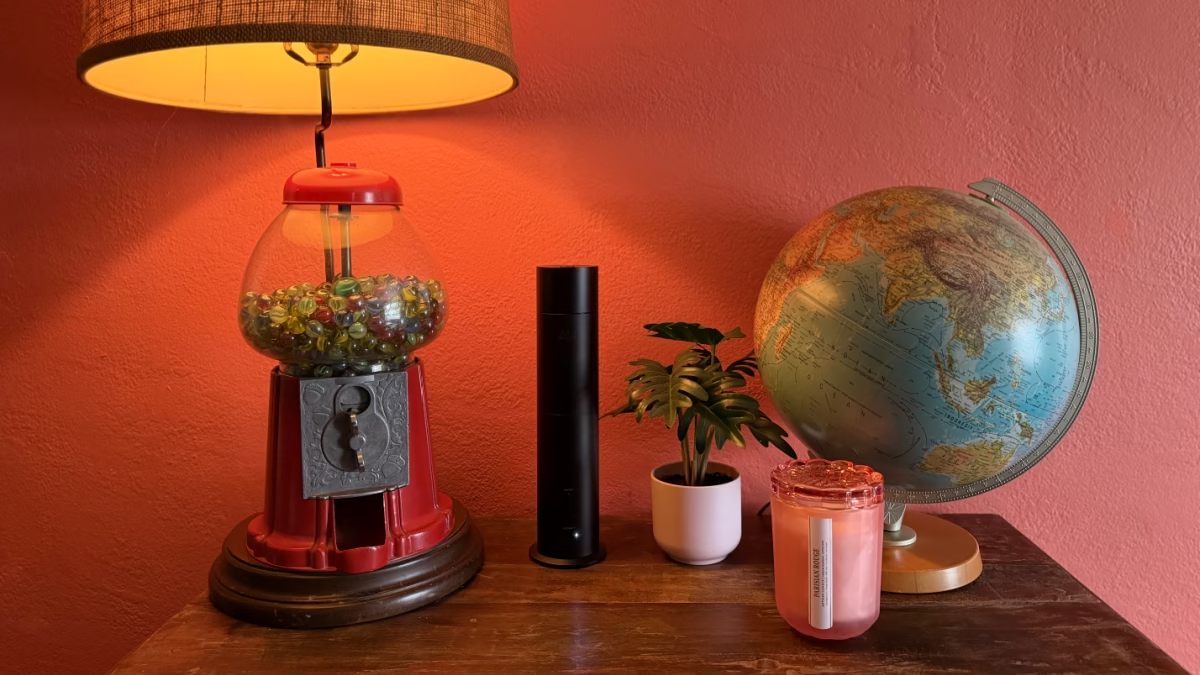
One More Thing: It Should Also Smell Amazing
That last point is not a closer. It is an invitation to keep going.
We spend a lot of energy on what we can see. The scent piece gets skipped almost every time, and it is the sense most directly wired to memory and emotional regulation.
There is a specific kind of grown-ass sober adult who pays serious attention to how her space smells. Not in a seasonal-Bath-and-Body-Works way. In a “my workspace is now one of the most important rooms I exist in and I want it to feel like a place I would never want to leave” way.
That is the energy.
I tested the Aura House V3 cold-air diffuser and wrote up the full review because it genuinely changed how my workspace and home feel. The fragrance oils are Sephora Clean certified and safe for pets, people, and plants. The diffuser looks like a sculpture, not an appliance. It runs silently all day without water, heat, or any attention from you.
Read the full Aura House review here. Save 10% by using code: SOBERCURATOR10 and #ADDTOCART
Your space should look like you. Feel like you. And smell like you too.
Long-term recovery is not just about not drinking or using. It is about building a life that is worth protecting. Your workspace is part of that life.
The lipstick keyboard is a good place to start.
#ADDTOCART: Shop the Lofree DOT Lipstick Keyboard on Amazon →
Watch my IG Reel Reviews – PART ONE & PART TWO
More tips on creating a space you love:
- Creating a Recovery Sanctuary: How Your Home Can Help You Heal
- What’s Your Sober Style? Take the Quiz and Find Out
- Unknowingly Holding Onto Triggers Can Derail Sobriety—Replace Them to Stay on Track

CURATED CRAFTS: Rhinestones, Real Estate, and Ridiculous Obsession – My Bedazzled Monopoly Saga

CURATED CRAFTS: Paint by Number Barbie – A Happy Accident Turned Art Therapy Win
WALK YOUR TALK Because the best thing you can wear is clarity, confidence, and a killer sense of style.

WALK YOUR TALK is The Sober Curator’s style destination for those redefining what it means to live vibrantly alcohol-free. From runway-ready ensembles to effortless everyday glam, we celebrate confidence, clarity, and the joy of dressing boldly without the pre-funk or party drinks.
More than a fashion column, Walk Your Talk highlights curated finds from our #ADDTOCART section, spotlights sober-owned small businesses, and showcases unique merch that makes your alcohol-free journey unapologetically chic. We proudly partner with the Break Free Foundation, bringing sobriety’s brilliance to the runway during New York Fashion Week and beyond.
🛍️ Submit a Product for Review: NA beverages, sober-friendly tools, alcohol-free brands, apparel, and accessories built for the way our audience actually lives. Submit your product →

SOBER POP CULTURE at The Sober Curator is where mainstream trends meet the vibrant world of sobriety. We serve up a mix of movie, podcast, fashion, and book recommendations alongside alcohol-free cocktails, celebrity features, and pop culture buzz—all with a sober twist.
We’re here to shatter the “sobriety is boring” myth with a mash-up of 80s neon, 90s hip-hop edge, early 2000s bling, and today’s hottest trends. From celebrity shoutouts to red-carpet style inspo, this is where sober is as chic as it is fun. To the celebs using their platform for good—our Sober Pop Trucker hats are off to you!
Resources Are Available
If you or someone you know is experiencing difficulties surrounding alcoholism, addiction, or mental illness, please reach out and ask for help. People everywhere can and want to help; you just have to know where to look. And continue to look until you find what works for you. Click here for a list of regional and national resources.
Q: Why does workspace design matter specifically for people in recovery?
People in long-term recovery are actively rebuilding identity, routine, and a sense of self that addiction eroded. The physical environment plays a direct role in reinforcing that work. A space that reflects who you actually are sends a daily message that you belong here, that this life is yours, and that the chapter you are living now is different from the one before.
Q: Do I have to spend a lot of money to create a workspace I love?
Not at all. Some of the most effective workspace upgrades cost next to nothing. A candle. Moving your desk toward natural light. Printing out a photo. Putting one object on your desk that makes you smile. The goal is sensory comfort and personal reflection, not interior design on a budget.
Q: What if I work from home and my space is shared or small?
Even a corner of a room can be yours. A specific chair. A small tray with your things on it. A dedicated section of a table. The point is creating a place that signals to your brain: this is where I show up. Physical boundaries, even small ones, carry psychological weight.
Q: I have heard that environment affects mental health, but is there research behind it?
Yes. Environmental psychology has documented the connection between physical spaces and mood, focus, and stress response for decades. Natural light, reduced clutter, and personal objects have all been linked to lower cortisol levels and improved concentration. For people in recovery, where emotional regulation is ongoing work, that research is not abstract. It is directly relevant.
Q: Can personalizing my workspace actually help with cravings or difficult emotional moments?
It can help create a buffer. A space that feels safe, intentional, and like yours gives your nervous system something to anchor to. It is not a clinical intervention, but sensory grounding through familiar and comforting objects is a recognized component of stress management. Think of it as one more tool in the toolkit.
Q: What are some easy first steps to make a workspace feel more personal?
Start with what bugs you most. Bad lighting? Fix that first. Clutter? Clear one surface. Then add one thing that is purely yours: a sticker, a small plant, a piece of art, a weird little object that means something to you. Build from there. It does not have to be finished to start working.