The rapper-turned-painter is channeling his darkest chapters into art that feels like a warning, a prayer, and a permission slip all at once.
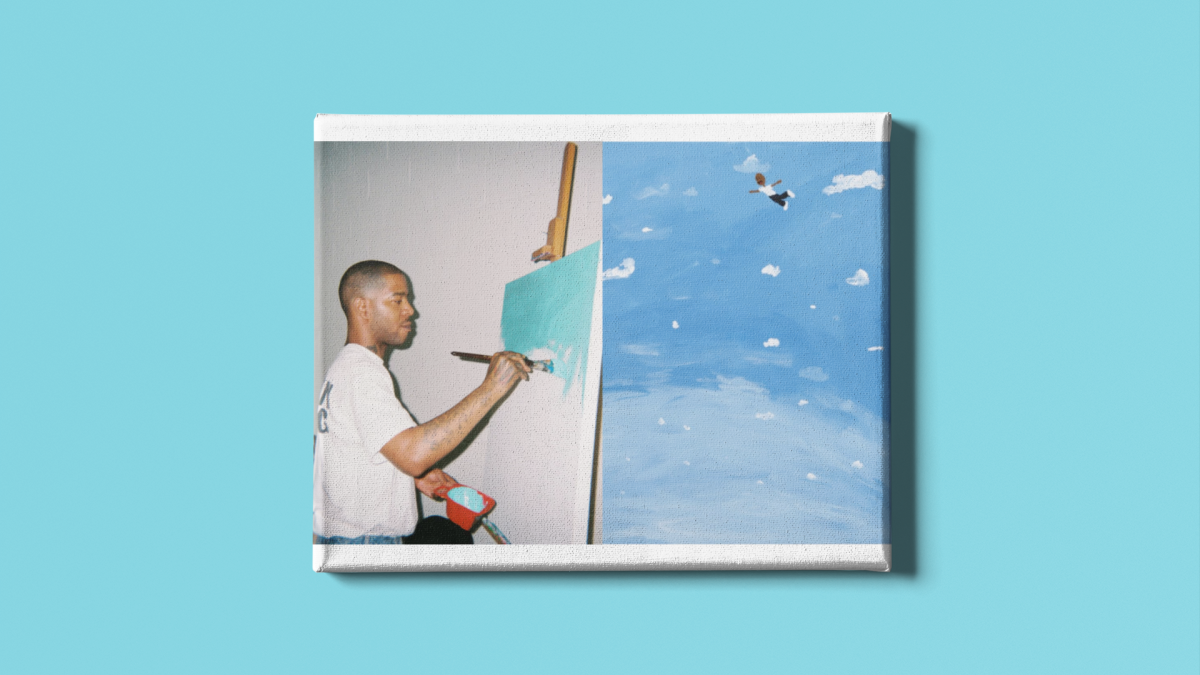
If you’ve ever listened to “Pursuit of Happiness” on repeat and thought, this song sounds like a party but feels like a cry for help, then you already understand what Kid Cudi is doing with a paintbrush.
For the past year and a half, the man born Scott Ramon Seguro Mescudi has been quietly painting alone in a warehouse studio, producing work that mirrors the same emotional tug-of-war that made his music a lifeline for millions. And when director Joshua Charow’s short documentary Echoes of the Past premiered at Art Basel Miami Beach in December 2025, the world finally got a look inside.
From Cartoonist Dreams to Canvas
Cudi didn’t just wake up one day and decide to be a painter. The roots go way back. As a kid growing up in Cleveland, he and his mom would make books together, printing pages at Kinko’s. He spent hours alone in his bedroom doodling, creating characters like “Nutty Spun” (a fifth-grade masterpiece involving a jetpack, a spaceship, and Mars). He wanted to be a cartoonist until he was about 16, when music took over and he chased that dream instead.
Fast forward to age 40. After years of battling depression, addiction, and the kind of self-sabotage he now openly paints about, Cudi decided he needed something to free his mind. So he bought some paint. He bought some canvases. And he got after it.
“This was exactly what I was searching for,” he says in the film. “Exactly what I needed.”
The Juxtaposition Is the Whole Point
Here’s what makes Cudi’s art so compelling for anyone who has lived through their own darkness and come out the other side: his paintings look bright, almost cartoonish, but the subject matter is heavy. Sound familiar? It’s the same thing he’s been doing with his music for over a decade.
He describes seeing sound in color. “Pursuit of Happiness” is bright pink, orange, and yellow. But the message underneath? That’s black and burgundy. His paintings work the same way. Playful hues meet demons. A character called Max, his painted alter ego dressed in baggy denim, gets chased by gleeful little monsters. Shadows loom. Warnings appear. One piece features the French word for “the end” painted on an old door he found at an antique shop, because he imagines it as the door you see when you die.
It’s dark. It’s also deeply honest. And for those of us who know what it feels like to smile through the struggle, it hits different.
Rehab, Recovery, and Painting Through It
Cudi has never been shy about his battles. He checked himself into rehab in 2016 for depression and suicidal urges, survived a stroke two weeks later, and spent months in physical rehabilitation. He’s spoken openly about cocaine addiction, about relapse, and about the loneliness that fame couldn’t fix.
More recently, he went to rehab again in late 2024, and during his time there, painting became a survival tool. He made collages, tried new techniques, and created pieces with messages like “Don’t talk, don’t trust, don’t feel” flipped into the affirmative: talk, trust, feel.
“I would have been going crazy in there if I didn’t have painting,” he says.
One of the most powerful moments in the mini documentary is when Cudi reflects on a conversation with his mom, who encouraged him to paint the light. His favorite painting came after that talk. It was his first piece that leaned toward something more positive. And the shift is visible.
“I am important and it took me some time to see that,” he says. “I spent years doubting myself. I’m not doubting myself no more.”
Scotty Ramon Steps Into the Gallery
For his art career, Cudi goes by Scotty Ramon, his first and middle name. He admits it feels a little weird since he never liked being called Scotty, but it represents something separate from Kid Cudi the musician. This is personal in a different way.
His debut solo exhibition, also titled Echoes of the Past, opened at Ruttkowski;68 in Paris on January 31, 2026, and runs through March 1. The show features 10 paintings plus an original score Cudi produced that plays throughout the gallery. Because of course he made a soundtrack for his own art show.
Why This Matters for the Recovery Community
Here’s the thing. We don’t cover Kid Cudi because he’s famous. We cover him because his story is one that so many people in recovery recognize in their own mirror.
The self-sabotage. The years of putting the wrench in your own bike spokes. That line from this mini-doc really spoke to me. The dark thoughts that always know where to find you. The moment you finally look at yourself and say, “Who are you really?” And then the even bigger moment when you decide to answer that question honestly.
Cudi describes his paintings as warnings, but not for himself. For other people still in the struggle. He sees himself as “the ultimate big bro,” and he wants his art to give the same guidance his music always has.
“That is why my music resonates, because it gives guidance to those who are lost,” he says. “And I want the paintings to have the same kind of theme.”
What I wouldn’t give to have an empty warehouse studio, collect antiques and canvases, and just paint and create all day. But honestly, you don’t need the warehouse. You just need the willingness to pick up whatever tool helps you process the hard stuff and turn it into something meaningful. For Cudi, it’s a paintbrush. For you, it might be something completely different.
The point is: he started. At 40. With no formal training. And he’s not doubting himself anymore.
If that’s not recovery energy, I don’t know what is.
Getting sober matters. Staying sober matters more. #ODAAT #NODAYSOFF
The documentary Echoes of the Past was directed by Joshua Charow, with an original score by Kid Cudi. The exhibition of the same name is on view at Ruttkowski;68 in Paris through March 1, 2026.
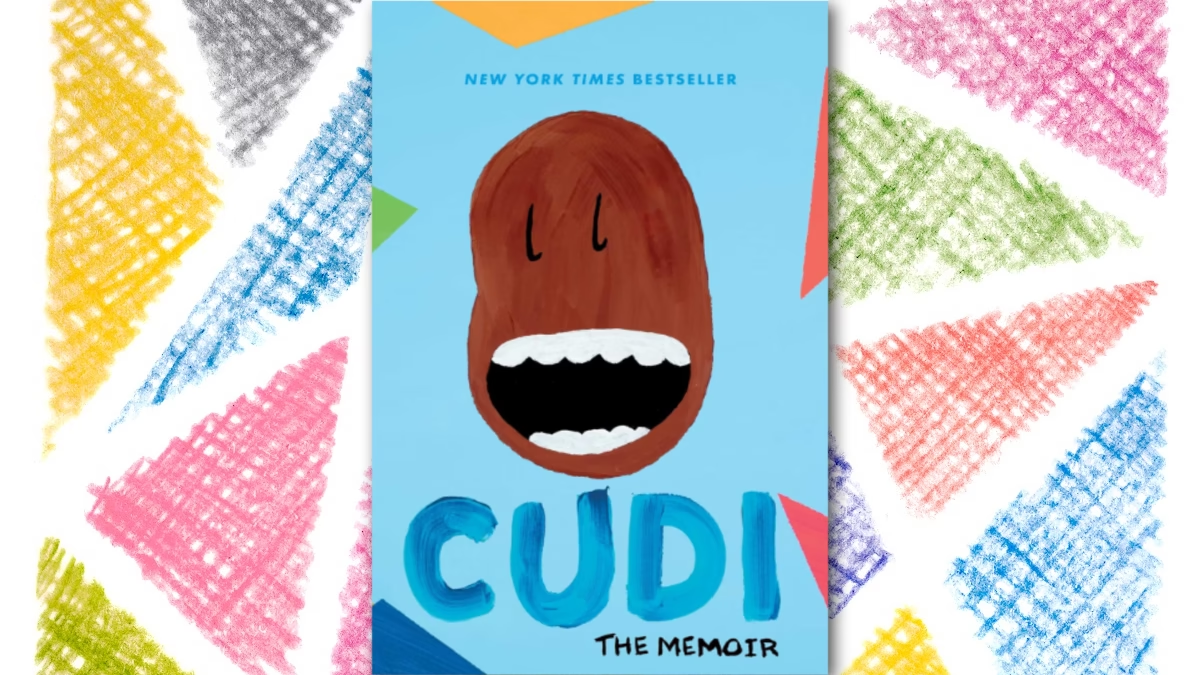
#QUITLIT: Cudi: The Memoir” – A Journey Through Dreams, Darkness, and Sobriety

CURATED CRAFTS at The Sober Curator is all about keeping your hands busy and your mind inspired in sobriety. Whether you’re diving into art therapy, channeling your inner Sober Picasso, or laughing your way through a Pinterest fail, creative expression can be a powerful tool for stress relief and emotional healing. Crafting isn’t about perfection—it’s about expanding your mind, expressing your feelings, and having fun along the way.
Follow our latest DIY inspiration on Pinterest, or, if crafting isn’t your thing, check out our #QUITLIT section for book recommendations that feed the soul. You can also shop our curated list of supplies on our Amazon Storefront.

SOBER POP CULTURE at The Sober Curator is where mainstream trends meet the vibrant world of sobriety. We serve up a mix of movie, podcast, fashion, and book recommendations alongside alcohol-free cocktails, celebrity features, and pop culture buzz—all with a sober twist.
We’re here to shatter the “sobriety is boring” myth with a mash-up of 80s neon, 90s hip-hop edge, early 2000s bling, and today’s hottest trends. From celebrity shoutouts to red-carpet style inspo, this is where sober is as chic as it is fun. To the celebs using their platform for good—our Sober Pop Trucker hats are off to you!
Resources Are Available
If you or someone you know is experiencing difficulties surrounding alcoholism, addiction, or mental illness, please reach out and ask for help. People everywhere can and want to help; you just have to know where to look. And continue to look until you find what works for you. Click here for a list of regional and national resources.