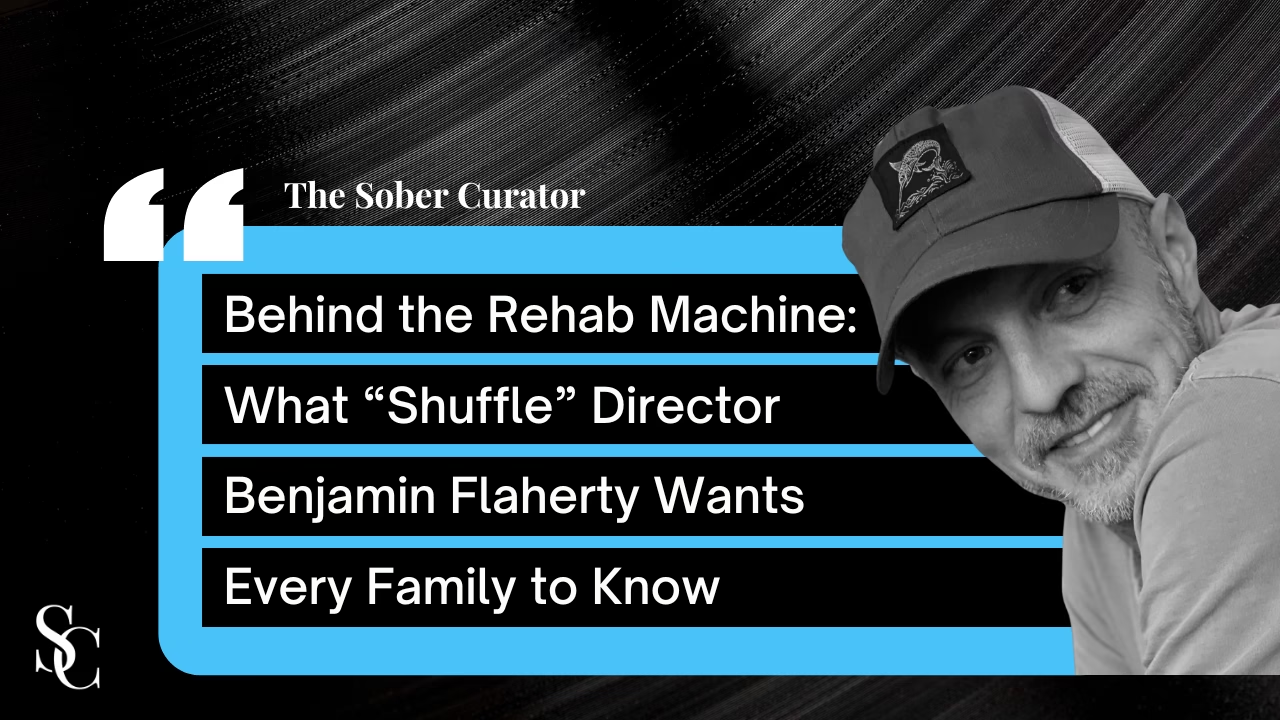
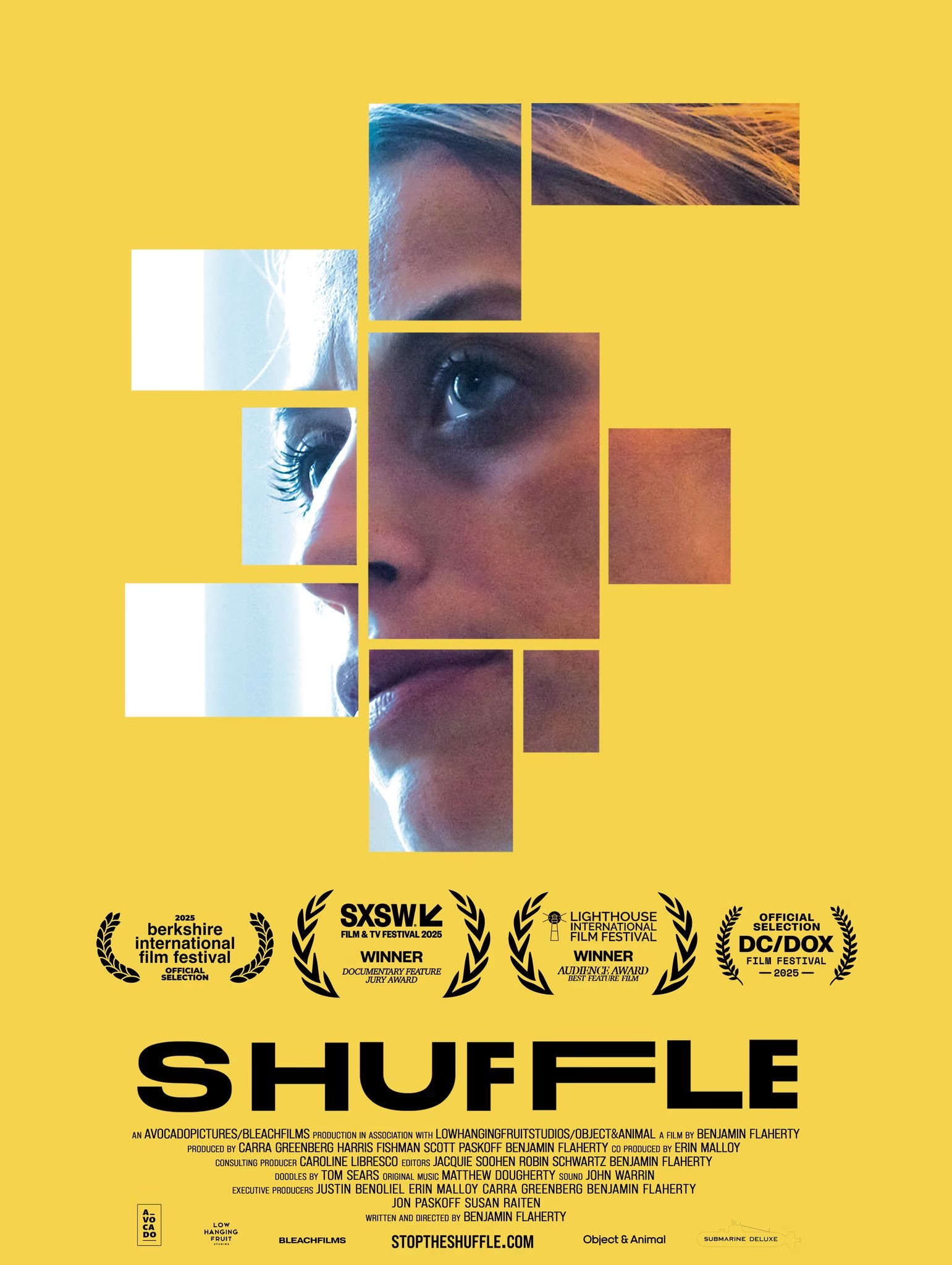
There’s a moment in this conversation when filmmaker Benjamin Flaherty describes parents walking out of his documentary screenings with tears in their eyes — not because the film retraumatized them, but because, for the first time, they realized what happened to their family wasn’t their fault.
That moment says everything about why this episode matters.
Benjamin’s work sits at the intersection of storytelling and systemic exposure. He’s not just making a film; he’s building a mirror large enough for families, loved ones, policymakers, and the entire recovery ecosystem to look into. And people are seeing truth — painful, freeing, clarifying truth.
The Recovery Industry No One Wants to Talk About
Addiction is already layered with silence, shame, grief, and generational pain. But when you add the business of recovery on top of it — insurance disparities, treatment mills, exploitation, and the heartbreaking economics of who gets help and who doesn’t — you get a system that is both saving lives and harming them.
Benjamin never planned to become the person shining a spotlight on those contradictions. He came from the world of commercial advertising, chasing achievement like it was oxygen. Sobriety stripped away the illusions he’d built around himself — that his next career milestone, next salary bump, next “win” would finally create the peace he’d been buying with alcohol and cocaine.
Recovery didn’t just change his life.
It clarified his purpose.
When he stepped into documentary filmmaking, he didn’t expect to find an entire industry full of families who’d been shamed into silence — parents who believed their child’s trauma or exploitation was somehow a personal failure.
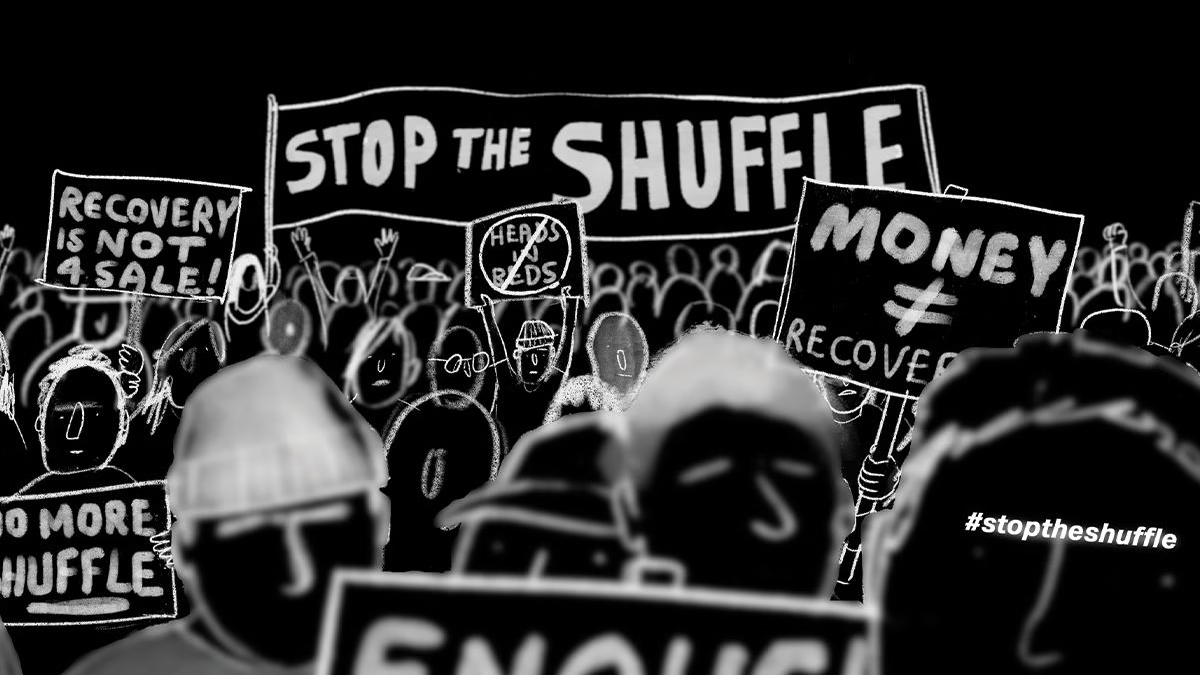
His film dismantles that belief one story at a time.
At screenings, parents tell him:
“I thought this only happened to us.”
“I thought I should have known better.”
“I thought I caused this.”
And then they meet other parents.
They compare stories.
They see the patterns.
Suddenly, shame loosens its grip.
Where Economics and Compassion Collide
Benjamin explains that addiction treatment is one of the only major health processes where families know almost nothing about the system until they’re thrown into it. Heart surgery, cancer treatment, psychiatric care — these all have established pathways and clear evidence-based standards.
Recovery?
It’s a maze.
Who you call first determines everything.
What insurance you have determines everything else.
Some treatment centers are excellent, ethical, clinically sound. Others operate like for-profit trafficking pipelines, shuttling people between facilities to maximize billing cycles. The average family has no way to distinguish between the two — especially in crisis.
This is where Benjamin’s advocacy hits hardest:
He is not vilifying treatment.
He is exposing the lack of transparency that keeps families vulnerable.
And he’s doing it in a way that humanizes everyone involved — the parents, the patients, the clinicians, and even the people whose jobs sit inside morally gray zones. His goal isn’t to sensationalize the system.
His goal is to illuminate it.
The Privilege Problem No One Wants to Admit
Alysse shares in the episode that she received excellent treatment — safe, structured, well-resourced — because she had “good insurance.” She names it plainly: it was privilege.
Not everyone gets a chance at recovery in an environment designed for healing.
Not everyone receives clinically sound care.
Not everyone gets dignity.
Many families spend their life savings. Others take out loans, empty retirement accounts, or mortgage their homes — and still end up with low-quality or predatory treatment. Some people cycle in and out of detoxes or rapid rehabs with no continuity of care at all.
Benjamin’s film shines a light on this two-tiered system in a way that feels both compassionate and confrontational. He forces viewers to ask:
Why does someone’s insurance policy determine whether they live?
Why should financial literacy dictate access to evidence-based care?
Why aren’t families given real information before choosing treatment?
These aren’t just logistical questions.
They’re ethical ones.
Pop Culture Has Entered the Chat — But Not Without Flaws
We’re living in a moment where Hollywood is suddenly fascinated with addiction narratives:
Dopesick. Painkiller. Pain Hustlers. Body Brokers.
Benjamin acknowledges the influence these stories have, but he’s also honest: scripted portrayals tend to flatten characters into archetypes — the villain doctor, the innocent victim, the greedy broker, the corrupt corporation.
His work aims to put the complexity back where it belongs.
Recovery isn’t one story.
It’s millions of stories shaped by impossible decisions.
His documentary refuses to pick a single villain or a single hero.
Instead, it asks the viewer to look at the whole ecosystem — an ecosystem built on both hope and heartbreak.
Why This Conversation Matters More Than Ever
Every sober person knows this truth:
Sobriety is not just a personal journey.
It exists inside a cultural, economic, and political context.
Benjamin’s film — and this episode — remind us that advocacy is part of recovery. Not everyone will become a filmmaker or policy warrior, but every story strengthens the collective push toward transparency, ethical care, and dignity for all.
One of the most powerful threads in the episode is the theme of relief.
Relief when families finally understand the system.
Relief when they meet each other.
Relief when someone says, “This isn’t your fault.”
Shame thrives in secrecy.
Benjamin’s film — and conversations like this — rip the secrecy wide open.
A New Kind of Recovery Story
Benjamin isn’t trying to fix the treatment industry in one film.
He’s trying to start the right conversation in the right room — with parents, survivors, clinicians, lawmakers, and anyone who has ever loved someone in addiction.
And that’s what The Sober Curator does best:
We hold space for truth.
We laugh where we can.
Advocates where we must.
Builds community where shame once lived.
His work is a reminder that sobriety isn’t just about personal transformation — it’s about cultural transformation.
And the more we understand the system, the less power it has to harm the people we love.
The Sobees Documentary Score: 5 out of 5

Hosted by Alysse Bryson & Tamar Routly, and produced by Podcast Impact Studio, The Sober Curator Podcast brings sober lifestyle, pop culture, & recovery to the mic. Alongside Alysse & Tamar, rotating global contributors join as co-hosts to explore zero-proof drinks, sober travel, quit lit, entertainment, & mental health. This is sober media with personality, perspective, & a glitter bomb of honesty. Sober-curious or living alcohol-free, we’ve got you! We’re not here to help you get sober. We’re here to help you live sober: and love it.
Some people look at a mountain and see a party. Ben Coombes used to be one of them: magnums of rosé at lunch, shots on the chairlift, and more near misses than he can count. Then he tried something nobody in a ski resort does. He did a sober season.
Now Ben runs Soberski, alcohol-free chalet weeks in Méribel in the French Alps, and he’s our newest Sober Curator contributor. Alysse and Tamar (a snowboarder, it turns out) talk with him about what happens when you keep the mountain and lose the après.
In this episode:
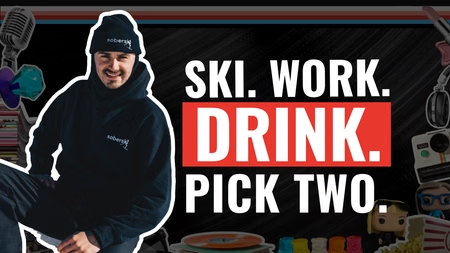
Ski, work, or drink: pick two. Ben’s seasons driving guests for a luxury chalet company
The sober season that became an Instagram page, then a business
The first booking came from New Jersey, and Ben thought it was a scam
Never skied? Ben’s guest who went from zero to flying around the mountain in about six hours of lessons
Private chefs, cold plunges, daily yoga, and evening workshops
The January 22 to 29, 2027 week in Méribel, and who it’s for (sober, sober curious, or just done with hangovers on holiday)
Ben’s pick for your queue: “The Gentlemen” on Netflix
Why Ben didn’t build a support group on a mountain. He built a room.
CHAPTERS
00:00 Cold open
01:29 You got sober. Now what?
04:06 Falling for the mountains at 21
05:13 Ski, work, or drink: pick two
06:36 The sober season experiment
08:43 Tamar’s 20-year-old snowboarder brain
09:36 Rosé at lunch, shots on the chairlift13:41 A word from our sponsor: Aura House
14:30 January 2027 in Méribel
15:34 North Americans welcome
18:06 Never skied? Start here
24:39 Watching strangers become friends
28:53 Pop culture pick: The Gentlemen
31:36 The Sober Swap, new in Backstage
35:13 Yoga, cold plunges, evening workshops
37:48 He didn’t build a support group. He built a room.
38:37 Where to find Soberski
Sober Shots:
“If I can not drink in a ski resort, then I can probably not drink anywhere.” (Ben Coombes)
“You are allowed to go somewhere ridiculous and beautiful to find him or her.” (Alysse Bryson)
Mentioned in this episode:
– Soberski | Instagram @s0berski
– Backstage with The Sober Curator: https://thesobercurator.com/backstage-with-the-sober-curator/
– The Sober Swap, our new October Backstage hang
– Krysty Krywko, “Skiing Sober: Rewriting Après-Ski Without Alcohol”
Getting sober matters. Staying sober matters more.
SEASON 2 MERCH: https://shopthesobercurator.com/
This episode is brought to you by Aura House. Save 10% with code TSC10: https://go.shopmy.us/p-64140200
SC RESOURCES: – Meet the Contributors – Alcohol + Substance Use Disorder Guide – Recovery Nonprofit Resource Guide – LGBTQ+ Recovery Resource Guide
CONNECT: www.thesobercurator.com | The Sober Sip newsletter: https://www.thesobercuratornewsletter.com/ | @thesobercurator on Instagram, X, TikTok, YouTube + Pinterest
Love the show? Rate, review + follow. It takes 60 seconds and helps more people find us. Feedback + guest ideas: thesobercurator@gmail.com
Hosted by Alysse Bryson with co-host + producer Tamar Routly. For informational and entertainment purposes only; not a substitute for professional advice.
Music: TSC S2 theme “Sober Shots” created by Alysse Bryson using Suno AI, under Suno’s commercial license.

MOVIE NIGHT WITH THE SOBER CURATOR: is your go-to guide for films and documentaries that intricately weave addiction, recovery, and mental health into powerful storytelling. Think of us as your bee-zy movie critics, curating a hive of must-watch titles that inspire, educate, and spark conversation.
Our review archives are neatly organized into Drama, Dramedy, and Documentary categories, making it easy to find your next captivating watch. Whether you’re in the mood for a heartfelt indie, a laugh-through-the-tears comedy, or a thought-provoking doc, we’ve got you covered.
FAMILY RESOURCE GUIDE: Families play a pivotal role in both the path to and through recovery. Research shows that individuals with strong family support have significantly better outcomes, including higher rates of sustained sobriety and improved mental well-being.
According to SAMHSA, people in recovery who receive active support from family members are twice as likely to remain sober and successfully engage with treatment plans. In fact:
- Recovery programs with family involvement see over 60% higher adherence to treatment protocols.
- Nearly 90% of people in recovery credit family or caretaker emotional support as a significant factor in their continued sobriety.
- Active family engagement reduces relapse risk, helps establish healthy routines, and strengthens motivation and accountability.
Why Family Support Matters:
- Reduces stigma & isolation – Acceptance and understanding foster belonging.
- Boosts mental well-being – Emotional support can help prevent or manage co-occurring mental health issues.
- Promotes healthy lifestyles – Families encourage adherence to recovery plans and positive daily habits.
- Builds accountability – Ongoing connection provides motivation and stability.
When families commit to learning about addiction, joining support groups, and actively participating in recovery, their involvement becomes transformative—not just supportive. Recovery is a collective journey, and compassionate, informed family engagement can be the foundation for lasting change.
Additional Resources:
- Alcohol & Substance Use Disorder Guide
- Nonprofit Recovery Resource Guide
- Family Resource Guide
- LGBTQ+ Recovery Resource Guide
- Glossary of Addiction & Recovery Terms
- Recovery Stories
- Break Free Foundation – Scholarships for those unable to afford inpatient treatment
If you or someone you love is in immediate danger, call 911. If you are in crisis and need immediate help, call 988.