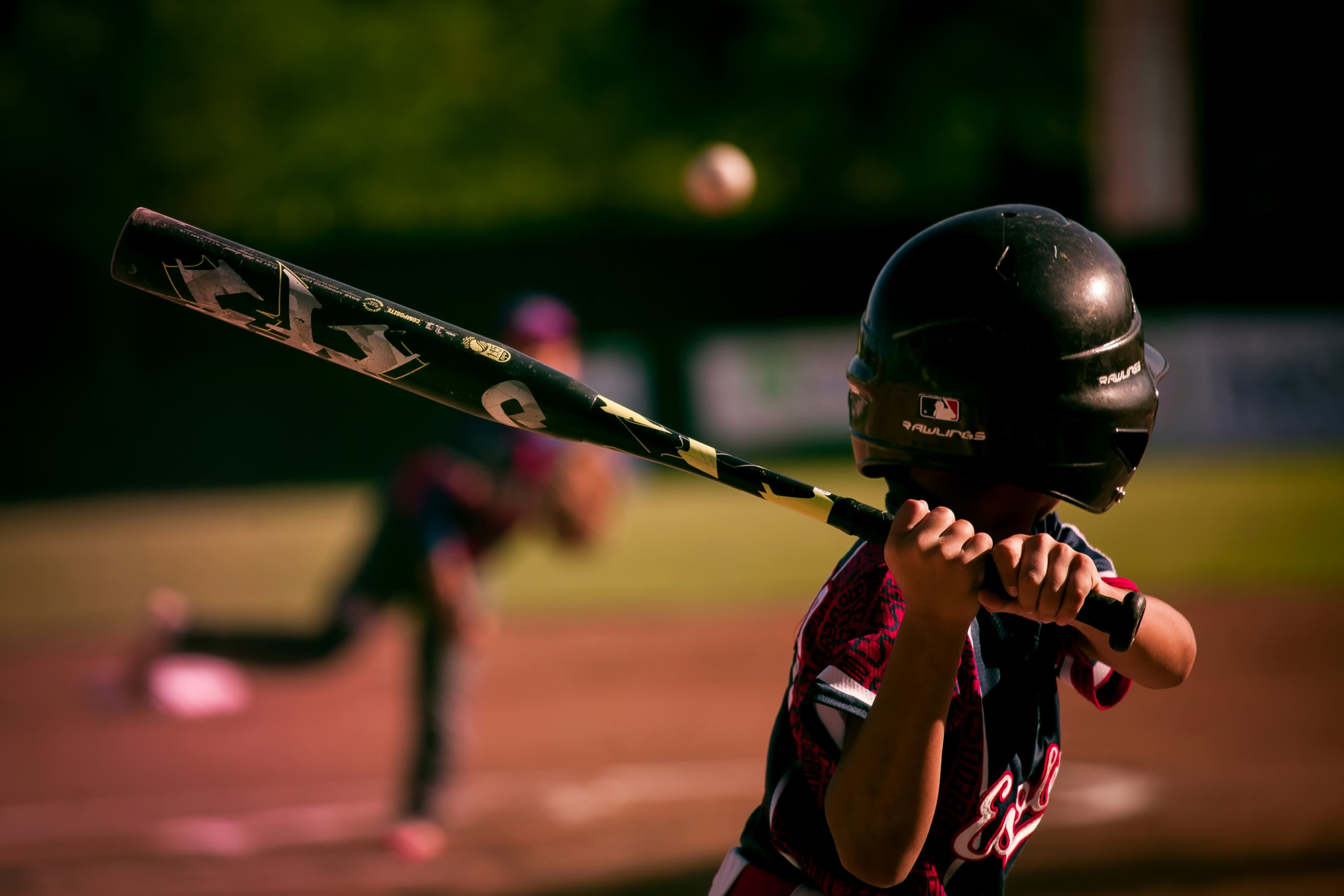
There was a time when youth sporting events felt simpler.
Parents packed folding chairs, kids chased foul balls, and weekends revolved around orange slices, Gatorade, and trying to make it to the next game on time. Today, many youth tournaments feel different. Coolers sit beside the dugout. Hard seltzers are passed around between innings. Parents joke about “needing a drink” to survive tournament weekends. Team gatherings after games often revolve around alcohol just as much as the kids themselves.
And somewhere along the way, many adults stopped questioning it.
As someone in recovery, this topic stands out to me in a different way than it once would have. Years ago, I viewed drinking at youth sporting events as harmless or normal. I even participated in it myself. That is the point, though. So much of alcohol culture survives because it becomes invisible. It blends into everyday life so thoroughly that people stop examining it.
The issue is not whether a parent quietly drinks one beer at a softball tournament. The deeper issue is what children absorb from the environment adults create around them.
Because kids are always watching.
Research consistently shows that parental behavior and family culture influence adolescent alcohol use. One study published in Substance Use & Misuse found that stronger parental support and connection predicted lower alcohol use in adolescents later in high school. Children are shaped not only by what parents say, but by what they consistently model.
That is what makes the growing normalization of alcohol around youth sports worth discussing.
Youth sports are supposed to teach discipline, teamwork, resilience, sacrifice, and healthy living. Yet many children are simultaneously exposed to adults who treat alcohol as a required part of the experience. Adults often speak passionately to kids about commitment, recovery, nutrition, performance, and mindset while sipping drinks from insulated cups on the sidelines.
Whether intentional or not, children notice the contradiction.
Research surrounding sports culture and alcohol use raises legitimate concerns. A review published through the National Institutes of Health found a positive association between exposure to alcohol sports sponsorship and increased alcohol consumption, including among schoolchildren. The relationship between sports and alcohol has become deeply embedded culturally, from professional stadium sponsorships to local tournament environments.
Children are not simply learning sports. They are learning what adulthood looks like.
And that matters.
There is also growing concern about parent behavior at youth sporting events generally. Research published in The Hawai‘i Journal of Health & Social Welfare documented frequent negative adult spectator behavior at youth sporting events, including hostile and emotionally reactive conduct. While alcohol is not the sole cause of these behaviors, it is difficult to ignore how often drinking becomes intertwined with emotionally charged sports environments.
One Ohio State University study found that parents drinking alcohol during the Super Bowl were more likely to engage in harsh discipline toward their children afterward. Again, the point is not that every parent who drinks becomes aggressive or irresponsible. The point is that alcohol changes environments, emotions, and decision making more than society often wants to admit.
Quiet Normalization
What concerns me most is not dramatic situations. It is the quiet normalization.
It is the child who grows up believing every stressful event, celebration, tournament, or social gathering naturally revolves around alcohol.
It is the young athlete who hears adults joke constantly about needing drinks to deal with parenting, coaching, or sports weekends.
It is the teenager who slowly internalizes the message that adulthood and alcohol are inseparable.
Research already shows complicated relationships between sports participation and alcohol use among adolescents. Several studies suggest that adolescent athletes may actually face increased risks for alcohol use compared to non-athletes, especially within certain team sport cultures. Environmental influences, peer norms, and adult modeling all contribute to that culture.
That should cause adults to pause and reflect.
Especially because many parents involved in youth sports genuinely care deeply about their children. They sacrifice enormous amounts of time, energy, and money to support them. Most are trying to create positive memories and opportunities. This is not about attacking parents. It is about honestly examining a culture that has become so normalized that few people even think critically about it anymore.
Recovery has forced me to think critically about it.
One of the biggest lies alcohol culture tells us is that something must be harmless simply because it is common. But common does not always mean healthy. Sometimes it simply means accepted.
The reality is that children build their understanding of adulthood through observation long before they ever make choices themselves. They watch how adults handle stress. They watch how adults celebrate. They watch how adults socialize. They watch what adults normalize.
And sports environments carry enormous influence because kids often idolize the adults around them.
That influence can be positive. Sports can absolutely build confidence, discipline, connection, and resilience. Research continues to show tremendous mental and physical health benefits associated with youth sports participation. But adults should also be willing to ask difficult questions about the environments surrounding those experiences.
Questions like:
- Why has alcohol become so attached to youth sporting culture?
- Why do adults feel uncomfortable attending children’s events without drinking?
- What are kids learning from us?
- And perhaps most importantly: What kind of atmosphere are we trying to create around youth sports in the first place?
I am not writing this from a place of superiority. I understand addiction and alcohol culture personally. I understand how easy it is to normalize behaviors simply because everyone else does. That is precisely why these conversations matter.
Because children deserve environments where healthy adulthood is modeled clearly.
Not perfectly. Clearly.
Maybe the issue is not whether one drink at a tournament is harmless.
Maybe the bigger issue is that many adults no longer notice how deeply alcohol has woven itself into spaces built for children.
And maybe that alone is worth reflecting on.

God, grant us the serenity to #ADDTOCART! Sober retail therapy is our favorite kind of workout—mindful, fun, and community-focused. In this section, you’ll discover unique sobriety gifts, premium recovery swag, and must-have merch we can’t stop raving about. We love featuring small businesses founded by people in recovery, sober creators, and brands that champion mental health and the sober lifestyle. From #QUITLIT reads to stylish glassware and meaningful recovery keepsakes, our curated picks make every purchase a celebration of sober living.
Shop our classic Sober Curator merch on SHOPTHESOBERCURATOR.COM for and explore our TSC Amazon Storefront featuring curated lists packed with gifts, books, and sober essentials.
🛍️ Submit a Product for Review NA beverages, sober-friendly tools, alcohol-free brands, and products built for the way our audience actually lives. Submit your product →
Resources Are Available
If you or someone you know is experiencing difficulties surrounding alcoholism, addiction, or mental illness, please reach out and ask for help. People everywhere can and want to help; you just have to know where to look. And continue to look until you find what works for you. Click here for a list of regional and national resources.
Follow The Sober Curator on TikTok
References
Koning, I. M., et al. “Parental Support and Monitoring and Adolescent Alcohol Use.” Substance Use & Misuse.
National Institutes of Health
Nelson, T. F., and Wechsler, H. “Alcohol and College Athletes.” Medicine & Science in Sports & Exercise.
National Institutes of Health
Ohio State University. “When Parents Drink During Super Bowl, Kids Get Harsh Discipline.”
Ohio State News
O’Rourke, D. J., et al. “Negative Adult Behavior at Youth Sporting Events.” Hawai‘i Journal of Health & Social Welfare.
PubMed
Torres, A., et al. “Alcohol Sports Sponsorship and Its Impact on Alcohol Consumption and Attitudes.”
National Institutes of Health
Westport News. “Do Parents Drink at Youth Sports Games? Officials Increasingly Concerned.”
CT Insider
“Adolescent Athletes and Alcohol Use.” Addictive Behaviors.
ScienceDirect
“Youth Sports and Mental and Physical Health Benefits.”
arXiv
Is alcohol allowed at youth sporting events?
Alcohol policies vary by venue, league, city, state, and tournament organizer. Some youth sports complexes prohibit alcohol entirely, while others may allow sales or outside alcohol in certain areas. The bigger concern in Justin’s piece is not only whether alcohol is technically allowed, but what kind of environment adults are creating around children’s sports.
Why is alcohol at youth sports controversial?
Alcohol at youth sports is controversial because these events are designed for children, but adult drinking can shift the atmosphere. Parents and coaches may be trying to teach discipline, teamwork, resilience, and healthy living while also modeling that alcohol belongs at every stressful, social, or celebratory event.
How does parental drinking affect children?
Children absorb more from adult behavior than many adults realize. When kids repeatedly see alcohol connected to stress relief, celebration, socializing, and sports weekends, they may internalize the idea that adulthood and drinking naturally go together.
Does youth sports culture influence teen drinking?
Research suggests that sports culture, peer norms, adult modeling, and environmental influences can all shape adolescent attitudes toward alcohol. Some studies have found that adolescent athletes in certain team sport environments may face increased risk for alcohol use compared to non-athletes.
Is the issue one parent having one beer at a game?
Justin’s article argues that the issue is bigger than one drink. The deeper question is about normalization: how alcohol has become woven into environments created for children, and whether adults have stopped noticing the message that sends.
Why does this topic matter to people in recovery?
People in recovery often become more aware of how alcohol culture hides in plain sight. What once seemed harmless or normal may look different through a sober lens, especially when children are watching and learning from adult behavior.
Can alcohol affect parent behavior at youth sports?
Alcohol can affect emotions, decision-making, and impulse control. While not every parent who drinks behaves poorly, drinking can become part of already emotionally charged sports environments, where tension, competition, and spectator behavior may already be difficult to manage.
What are children learning when adults drink at youth sports?
Children may learn that alcohol is a normal part of handling stress, celebrating wins, coping with losses, and socializing with other adults. Even when adults do not intend to send that message, repeated exposure can shape how young people understand adulthood.
How can parents create healthier youth sports environments?
Parents can model healthy behavior, focus on sportsmanship, keep the attention on the kids, support positive team culture, avoid making alcohol the center of social interaction, and question whether drinking belongs in spaces built for children.
What is the main takeaway from this article?
The main takeaway is that common does not always mean harmless. Youth sports can be a powerful place to model discipline, connection, and healthy adulthood — but adults need to be willing to examine how alcohol culture has quietly entered those spaces.