I didn’t start using kratom to get high.
I started because I wanted to be better.
More energy.
More focus.
Longer workouts.
Better training sessions.
Like many athletes, I was always looking for a legal edge. I found it sitting on the shelf of a local gas station.
There wasn’t a prescription.
There wasn’t a pharmacist.
There wasn’t even a dosing guide.
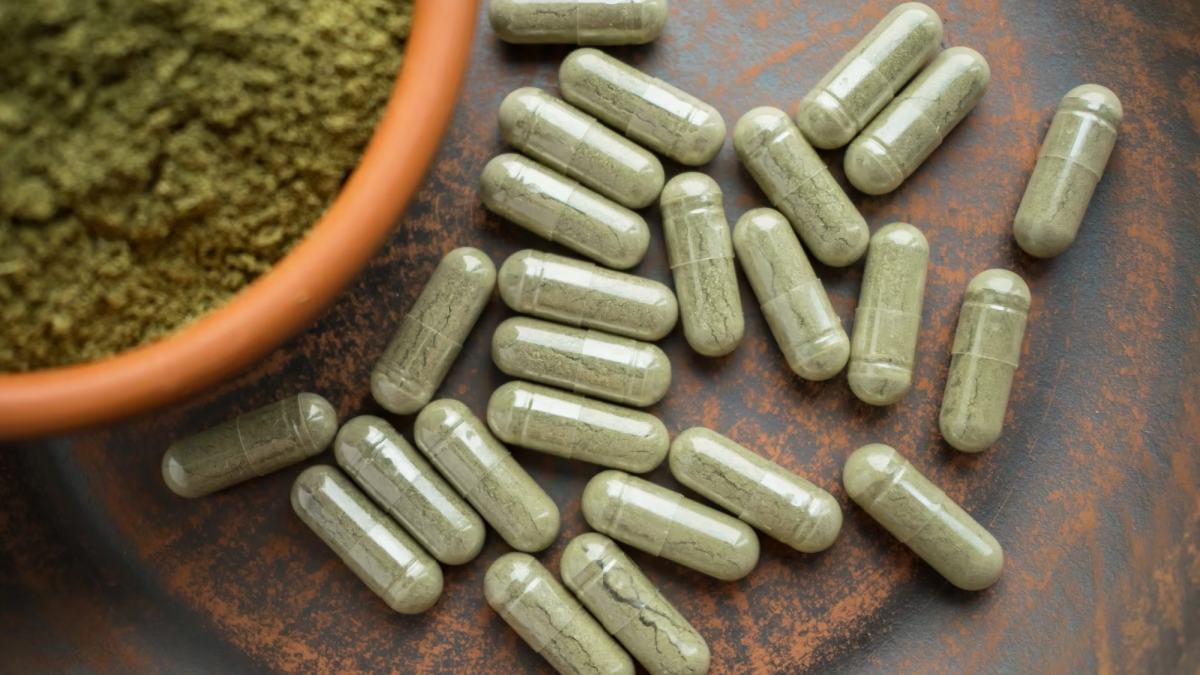
Just bags of powder and pills marketed as a natural supplement.
I asked doctors about it. Most had never even heard of it.
So I did what far too many people do.
I guessed.
I started with three grams once a day.
Then three grams twice a day.
Then three times a day.
Within a year, I was taking more than 100 grams every day.
That’s how quickly something marketed as “natural” became something I couldn’t function without.
Why athletes are drawn to kratom
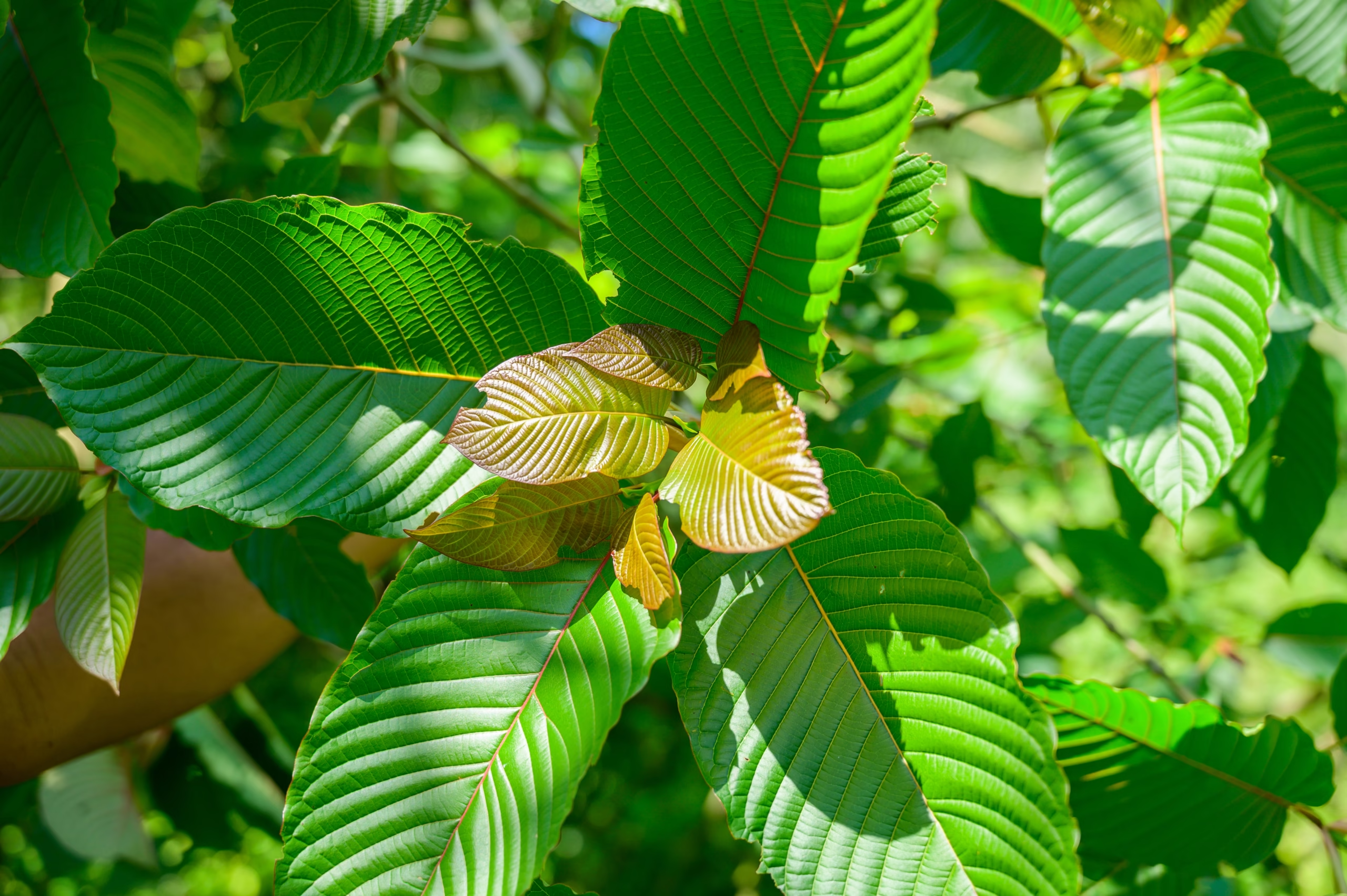
Kratom comes from the leaves of a tree native to Southeast Asia. Its primary active compounds—mitragynine and 7-hydroxymitragynine—interact with opioid receptors in the brain, though their pharmacology is more complex than traditional opioids.
Many products are marketed by “vein color.”
- White vein is commonly promoted for energy, focus, and motivation.
- Green vein is marketed as balanced energy and mood.
- Red vein is marketed for pain relief, relaxation, and sleep.
Many users also report that lower doses tend to produce more stimulant-like effects, while higher doses produce more sedating or opioid-like effects, though products vary widely because there is no standardized manufacturing.
For an athlete…
Energy before practice.
Focus during workouts.
Recovery after training.
Better sleep before competition.
Those promises sound almost too good to pass up.
The biggest lie I believed
Because it was sold at gas stations, smoke shops, and online, I assumed it couldn’t be that dangerous. It was not alcohol at least.
If it were dangerous…
Surely it wouldn’t be sitting next to energy drinks.
That assumption almost cost me everything.
The FDA has not approved kratom for any medical use and has warned about its risks, including dependence, inconsistent potency, and contamination in some products.
There is no standard dose.
No guarantee that one package contains the same amount of active ingredients as the next.
No assurance that what’s on the label is actually what’s inside.
Withdrawal changed my perspective
I’ve been through withdrawal before.
Nothing compared to quitting kratom.
For me, it was the worst physical experience of my life.
The anxiety.
The insomnia.
The restless legs.
The sweating.
The skin crawlers that kept me awake for 72 hours.
The feeling that my body simply wouldn’t settle down.
Research shows that regular heavy use can lead to tolerance, dependence, and withdrawal, though the severity varies greatly from person to person.
My experience was severe.
I wouldn’t wish it on anyone.
Why parents and coaches need to pay attention
This isn’t just an adult issue.
Many kratom products are sold as powders, capsules, gummies, extracts, and drinks. Depending on state law, teenagers may have relatively easy access through smoke shops, convenience stores, or online retailers.
Ask yourself this:
- How many high school athletes are looking for more energy?
- How many want to recover faster?
- How many are trying to sleep better?
- How many are looking for any legal advantage they can find?
That’s exactly why conversations about kratom need to happen before experimentation does.
My message to athletes
I understand why people try it.
I did.
In the beginning, I wasn’t chasing a high.
I was chasing better performance.
That’s what makes kratom so deceptive.
For some people, it begins as a performance enhancer.
For others, it becomes a dependency they never expected.
Natural doesn’t always mean safe.
Legal doesn’t always mean harmless.
And just because something is sold at a gas station doesn’t mean it belongs in an athlete’s body.
If sharing my story keeps one athlete, one parent, or one teenager from walking the same road I did, then every difficult chapter has served a purpose.
God, grant us the serenity to #ADDTOCART! Sober retail therapy is our favorite kind of workout—mindful, fun, and community-focused. In this section, you’ll discover unique sobriety gifts, premium recovery swag, and must-have merch we can’t stop raving about. We love featuring small businesses founded by people in recovery, sober creators, and brands that champion mental health and the sober lifestyle. From #QUITLIT reads to stylish glassware and meaningful recovery keepsakes, our curated picks make every purchase a celebration of sober living.
Shop our classic Sober Curator merch on SHOPTHESOBERCURATOR.COM for and explore our TSC Amazon Storefront featuring curated lists packed with gifts, books, and sober essentials.
🛍️ Submit a Product for Review NA beverages, sober-friendly tools, alcohol-free brands, and products built for the way our audience actually lives. Submit your product →
Resources Are Available
If you or someone you know is experiencing difficulties surrounding alcoholism, addiction, or mental illness, please reach out and ask for help. People everywhere can and want to help; you just have to know where to look. And continue to look until you find what works for you. Click here for a list of regional and national resources.
Follow The Sober Curator on TikTok
References
National Institute on Drug Abuse (NIDA): Kratom
National Institute on Drug Abuse. (2026, March 11). Kratom. U.S. Department of Health and Human Services. https://nida.nih.gov/research-topics/kratom
U.S. Food and Drug Administration: FDA and Kratom
U.S. Food and Drug Administration. (2025, December 2). FDA and kratom. https://www.fda.gov/news-events/public-health-focus/fda-and-kratom
Mayo Clinic: Kratom—Unsafe and Ineffective
Mayo Clinic Staff. (2024, June 18). Kratom: Unsafe and ineffective. Mayo Clinic. https://www.mayoclinic.org/diseases-conditions/prescription-drug-abuse/in-depth/kratom/art-20402171
Frontiers in Pharmacology: Kratom Safety and Toxicology
Henningfield, J. E., Grundmann, O., Huestis, M. A., Smith, K. E., et al. (2024). Kratom safety and toxicology in the public health context: Research needs to better inform regulation. Frontiers in Pharmacology. https://doi.org/10.3389/fphar.2024.1403140
American Psychiatric Association: What Is Kratom and Why Is It Raising Concerns?
American Psychiatric Association. (2025, October 22). What is kratom and why is it raising concerns? https://www.psychiatry.org/news-room/apa-blogs/what-is-kratom-and-why-is-raising-concerns
1. Is kratom legal?
Kratom is legal in many states but banned or restricted in others. Even where it is legal, it is not approved by the FDA for any medical use, and products are not subject to the same manufacturing standards as prescription medications.
2. Why do athletes use kratom?
Many athletes report using kratom in an effort to increase energy, improve focus, reduce pain, or aid recovery. Products marketed as “white vein” are commonly promoted for energy and alertness, while “red vein” products are marketed for relaxation and sleep. Scientific evidence supporting these uses is limited, and product quality varies widely.
3. Can you become addicted to kratom?
Yes. Regular use can lead to tolerance, physical dependence, cravings, and withdrawal. Some people require professional treatment to stop using it, particularly after long-term or high-dose use.
4. What are the symptoms of kratom withdrawal?
Withdrawal symptoms can include anxiety, insomnia, irritability, sweating, muscle aches, nausea, diarrhea, restlessness, and intense cravings. Severity varies depending on the amount used and length of use.
5. What should parents know about kratom?
Kratom is often sold as powders, capsules, gummies, teas, extracts, and drinks in smoke shops, vape shops, convenience stores, gas stations, and online. Because it is marketed as a “natural” product, many teenagers and young adults mistakenly assume it is safe. Parents should talk with their children about the risks, especially if they are involved in sports or are looking for ways to improve energy, focus, or recovery.