For most of my adult life, I believed I was a “moderate drinker.”
I worked hard, rarely missed a day in my dermatology practice, taught at the UC Irvine School of Medicine for decades, and maintained the outward appearance of someone in control. I didn’t drink in the morning. I never got a DUI. My lab work always looked “normal.”
In other words, I looked fine.
But looking fine is one of the most misleading indicators we rely on when we evaluate alcohol. I learned that lesson the hard way, both personally and professionally. And here we are in 2025, with many people still misunderstanding what moderate drinking really means, especially in light of updated guidance about alcohol and cancer risk.
The truth is simpler, and more uncomfortable, than most of us want to admit:
Moderate drinking is not the same thing as safe drinking.
Below are three of the biggest misconceptions I see and why they matter more than ever.
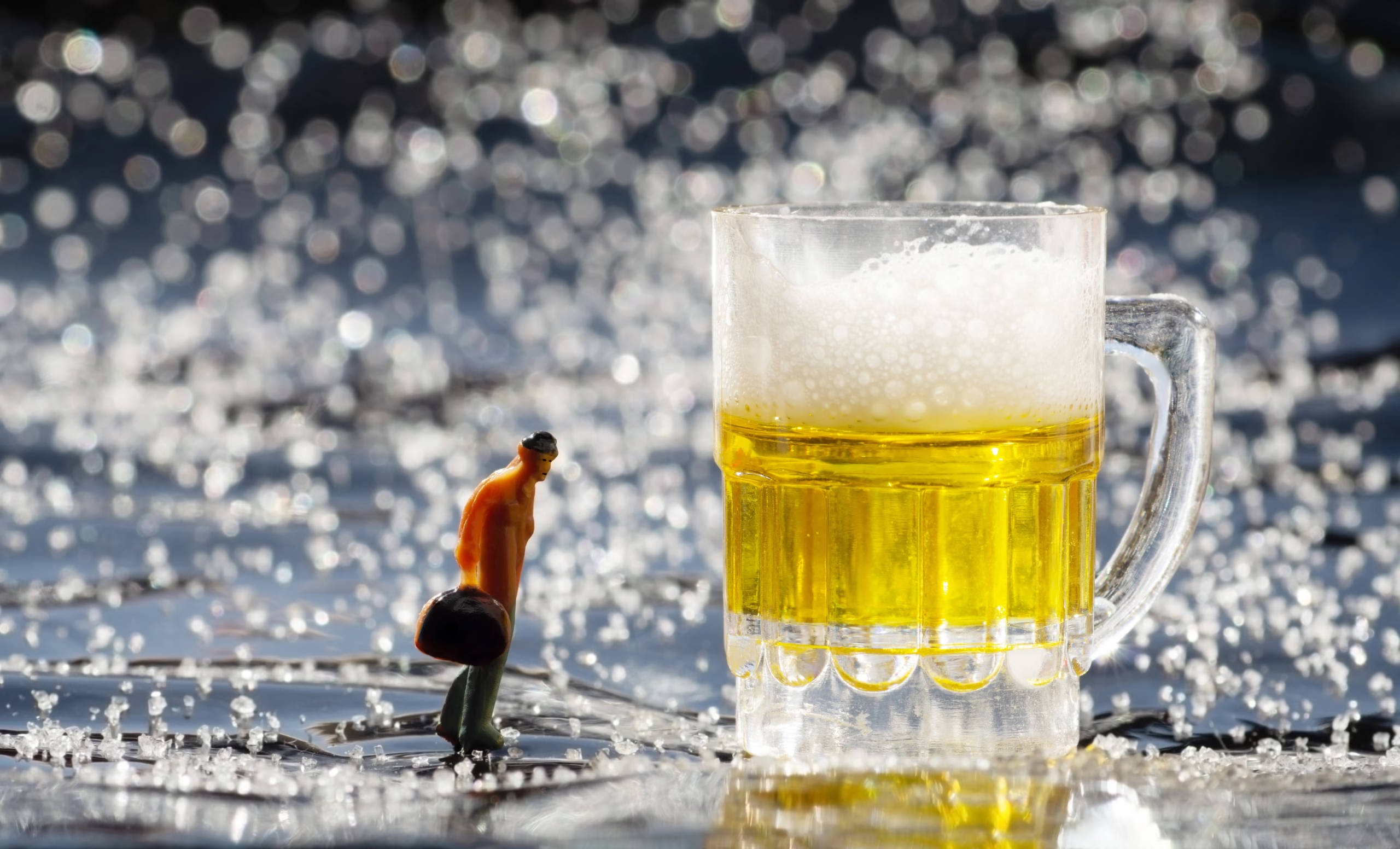
1. “Moderate drinking” is defined by culture, not science
When people tell me how much they drink, I quietly double the number in my head.
Not because anyone is lying. Alcohol encourages minimization.
A “couple of glasses” often becomes four.
A “nightcap” becomes two.
A “light weekend” stretches across a long afternoon.
Even when people report accurately, the definition of “moderate” is usually borrowed from social norms, not medical reality.
Culturally, we’ve equated not drunk, not out of control, and not daily with moderate. But from a physiological standpoint, moderation is far more stringent.
Research from cancer and cardiac societies continues to show that even low-level drinking increases cancer risk, including breast, colon, liver, throat, and esophageal cancers.
Alcohol doesn’t need to cause intoxication to cause harm.
It doesn’t need to derail your life to quietly alter hormones, disrupt cellular repair, or inflame tissue.
Most definitions of moderation are based on identity:
- “I’m a social drinker.”
- “I’m not like people with a problem.”
- “Everyone I know drinks this way.”
But the body doesn’t measure identity.
It measures ethanol.

2. “Moderate” doesn’t protect you from anxiety, sleep issues, or brain fog
When I drank, I told myself alcohol helped me unwind. Many of my patients said the same thing.
Alcohol does offer temporary relief. I won’t deny that. But physiologically, it creates the very problems we believe it solves.
Sleep
Many moderate drinkers believe alcohol helps them fall asleep. It does, briefly.
Once the sedative effect wears off, the brain rebounds with heightened activity, disrupting REM sleep and increasing nighttime awakenings. People often blame stress, aging, or insomnia, unaware that alcohol is the culprit.
Anxiety
Alcohol temporarily lowers anxiety by depressing the central nervous system. The next day, the nervous system overcorrects, raising baseline anxiety.
For many drinkers, “hangxiety” becomes so common they assume it’s their personality rather than a physiological rebound from the night before.
Cognition and aging
Even low-to-moderate alcohol use affects memory consolidation, reaction time, and cognitive sharpness. Over years, this impact accumulates.
Many people in their 40s, 50s, and 60s blame aging for brain fog when the real issue is cumulative neurological stress.
You don’t need to “have a problem” with alcohol for alcohol to create a problem for you.
3. “Not bad enough” doesn’t mean “not dangerous”
Most moderate drinkers don’t see themselves in cautionary alcohol stories. That was true for me, too.
I didn’t drink in the morning.
I didn’t miss work.
I didn’t black out.
I didn’t think my drinking hurt anyone else.
The problem is that alcohol-related harm often develops silently.
Cancer doesn’t announce itself early.
Liver stress doesn’t appear in bloodwork until damage is advanced.
Sleep disruption, depression, acid reflux, and hypertension creep in quietly while someone appears perfectly functional.
High-functioning drinkers are often at the highest risk because they receive no external signals prompting change.
For years, my outward functioning protected me from confronting the truth. It also protected alcohol from being questioned in my life.
That’s how moderate drinking becomes harmful: quietly, gradually, and without drama.
So what should “moderate drinking” mean in 2025?
I’m not here to shame or frighten anyone. Many people are reevaluating their relationship with alcohol, and what they need is clarity.
Here’s what I tell people now:
- If you drink, drink with full awareness. Understand the biological risks, not just cultural norms.
- If you use alcohol for sleep or stress, that’s a signal, not a solution.
- If you’re wondering whether your drinking “counts,” it probably already does.
- If you feel “not bad enough” to reassess your habits, that’s the perfect time to do it.
The best time to question alcohol is before something forces you to.
You don’t have to hit a dramatic low to choose a healthier path. You don’t need a label to want more energy, clarity, or peace. And you certainly don’t have to drink to belong.
A hopeful note
I spent years believing moderate drinking was harmless because it fit the image I had of myself: a capable doctor, a good father, a responsible adult.
But alcohol doesn’t care about our image. It only interacts with our physiology.
Becoming honest with myself changed my life. My hope is that honesty can help others see their drinking more clearly too, not with fear or shame, but with the freedom that comes from understanding what’s really happening behind the ritual.
Moderate drinking doesn’t protect us from harm.
Awareness does.
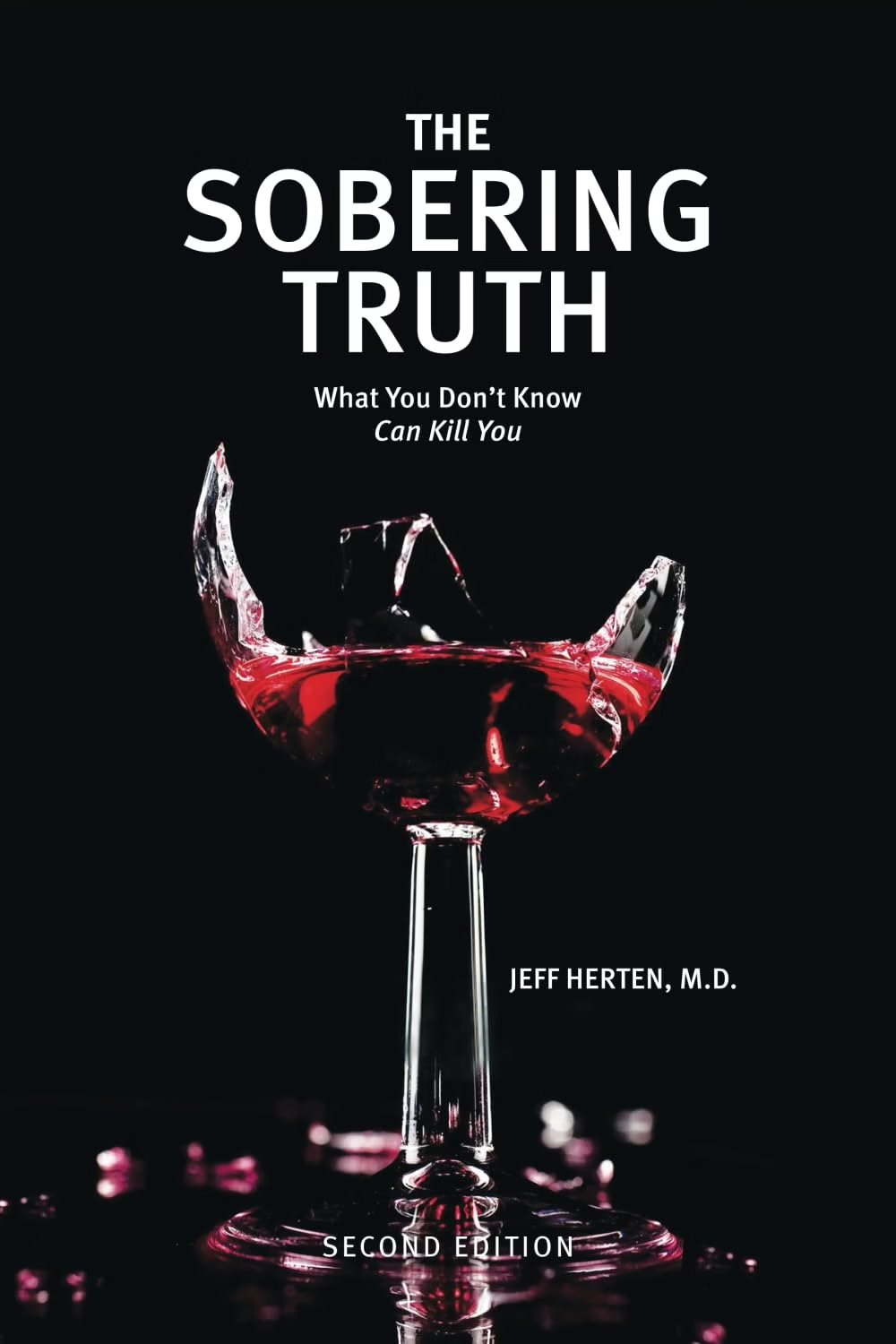
By Guest Contributor: Jeff Herten, M.D., Author of The Sobering Truth
SPEAK OUT! SPEAK LOUD! at The Sober Curator is a celebration of authentic voices in recovery—echoing Madonna’s call to “Express yourself!” Here, readers and contributors take the spotlight, sharing transformative sobriety journeys, creative talents, and new avenues of self-expression discovered along the way. Through videos, poems, art, essays, opinion pieces, and music, we break the silence that often surrounds addiction, replacing it with connection, hope, and inspiration.
Your story matters—and we want to hear it. Submit your work to thesobercurator@gmail.com or DM us on social media.
Disclaimer: All opinions expressed in the Speak Out! Speak Loud! Section are solely the opinions of the contributing author of each individual published article and do not reflect the views of The Sober Curator, their respective affiliates, or the companies with which The Sober Curator is affiliated.
The Speak Out! Speak Loud! posts are based upon information the contributing author considers reliable. Still, neither The Sober Curator nor its affiliates, nor the companies with which such participants are affiliated, warrant its completeness or accuracy, and it should not be relied upon as such.
TSC LIBRARY: Step into The Sober Curator Library! Here, books are more than pages—they’re portals. We read them, listen to them, obsess over them, and then spill our thoughts in curated reviews.
Explore our four signature genres: #QUITLIT, Addiction Fiction, Self-Help, and NA Recipe Books.
Want even more inspo? Our Amazon #QUITLIT list of books written by Sober Curator Contributors.
Resources Are Available
If you or someone you know is experiencing difficulties surrounding alcoholism, addiction, or mental illness, please reach out and ask for help. People everywhere can and want to help; you just have to know where to look. And continue to look until you find what works for you. Click here for a list of regional and national resources.