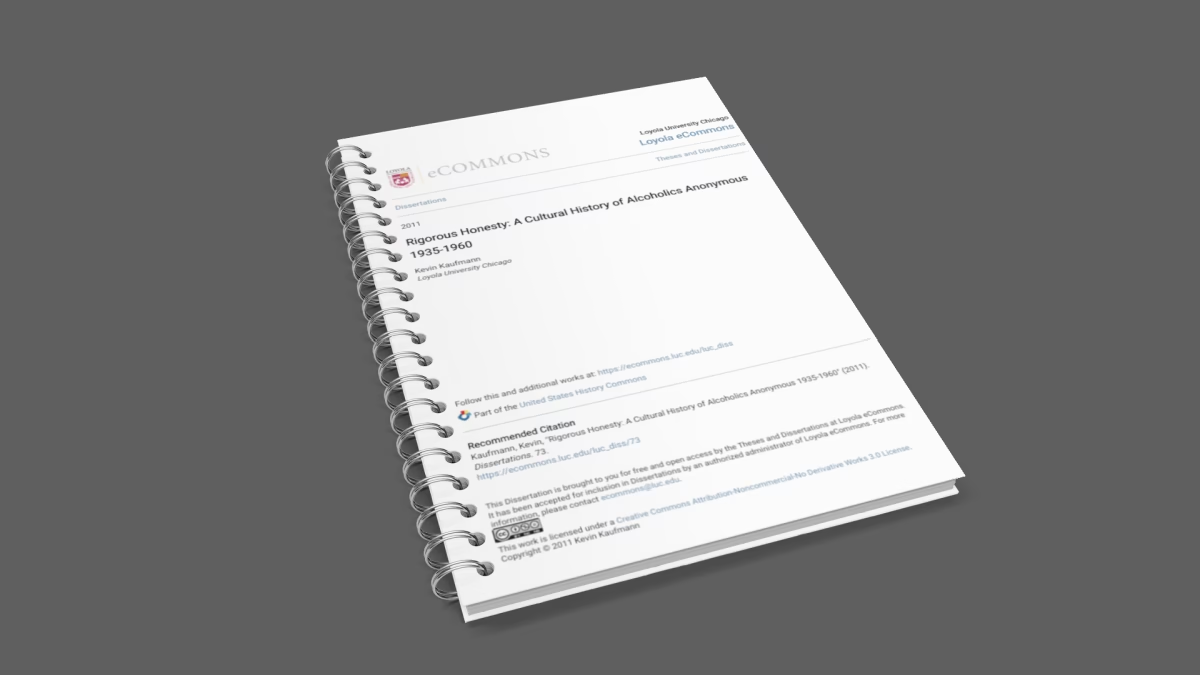
Kevin Kaufmann’s “Rigorous Honesty” looks at Alcoholics Anonymous in a different way. Instead of treating AA only as a recovery program, the book explores it as a product of its time. Kaufmann shows how AA grew out of American culture and, in turn, helped change how people think about addiction, responsibility, and community.
This is not a self-help book. It is a history book that asks big questions about why AA took the shape it did and why its ideas mattered so much to the people who found it.
A History Shaped by Its Time
Kaufmann focuses on the years from the 1930s through the 1950s. He places AA alongside major events like the Great Depression, Prohibition, World War II, and the more conservative mood that followed the war. By doing this, he shows that AA did not appear out of nowhere. It was shaped by the fears, values, and pressures of American life during those decades.
The idea of “rigorous honesty” is central to the book. Kaufmann explains that honesty in AA was more than a personal tool for staying sober. It pushed back against a culture that valued image, pride, and self-reliance. At a time when failure was deeply shameful, AA asked people to admit their worst moments out loud, in front of others. That was a radical idea.
Why This History Matters
Many books about AA focus on founders, meetings, or internal growth. Kaufmann takes a wider view. He shows how AA changed over time by responding to the world around it. The book explains how:
- Early AA grew out of older temperance and reform movements.
- World War II helped AA spread quickly across the country.
- After the war, AA adjusted its language and structure to fit a more conservative and business-focused culture, while still holding onto core ideas like confession and shared responsibility.
Because of this, AA is shown as something living and flexible, not a fixed set of rules.
The Book’s Strongest Insights
Kaufmann is especially strong when he explains why AA’s practices mattered culturally. Steps, sponsorship, and confession were powerful because they went against the norm. AA valued truth over reputation and honesty over appearance. “Rigorous Honesty” became both a way to heal and a quiet challenge to society’s habits of denial and performance.
Who This Book Is For
This book is best for readers who enjoy thoughtful, serious history. It will appeal to longtime AA members, scholars, and anyone curious about how recovery fits into larger social patterns. It is not meant for newcomers looking for guidance on how to get sober.
Some readers may find the writing dense at times, since it focuses more on ideas than on personal stories. But readers willing to slow down will gain a deeper understanding of where AA came from and why it worked.
Final Thought
“Rigorous Honesty” shows that AA was never just about quitting drinking. From the beginning, it was an experiment in telling the truth together. Kaufmann makes the case that honesty was not only a moral choice, but a survival skill. In that way, AA became a mirror for a society struggling to face its own flaws.
#QUITLIT Sobees Score: 3 out of 5


CURATED CRAFTS: Bedazzling My Big Book: Because Recovery Deserves Rhinestones

A STOIC SOBRIETY: Welcome to A Stoic Sobriety. I am Tony Harte, and I believe that Empowering Recovery with Stoic Wisdom is the game-changer you’ve been looking for.
With over 36 years of continuous sobriety (since 1989) and professional experience in addiction treatment, I know that recovery isn’t just about quitting—it’s about evolving.
Here, we combine the tried-and-true approaches of the AA 12-Step Program with the ancient, logical wisdom of Stoicism. Whether you are an agnostic, a believer, or simply seeking strength, let’s embark on this path of enlightenment together.
Sober Curator Pro Tip: Want to see how Tony breaks down the 12 steps through the lens of stoicism? CLICK HERE

TSC LIBRARY: Welcome to The Sober Curator Library! This isn’t your average stack of books—we’re talking full-on story immersion, Audible binges, and reviews with personality. Browse our four go-to genres: #QUITLIT, Addiction Fiction, Self-Help, and NA Recipe Books. And if you’re collecting recovery reads like rare trading cards, check out our Amazon #QUITLIT list—Early Sobriety Survival: Books for Your First 90 Days.

SOBERSCRIBE NOW!
Resources Are Available
If you or someone you know is experiencing difficulties surrounding alcoholism, addiction, or mental illness, please reach out and ask for help. People everywhere can and want to help; you just have to know where to look. And continue to look until you find what works for you. Click here for a list of regional and national resources.