


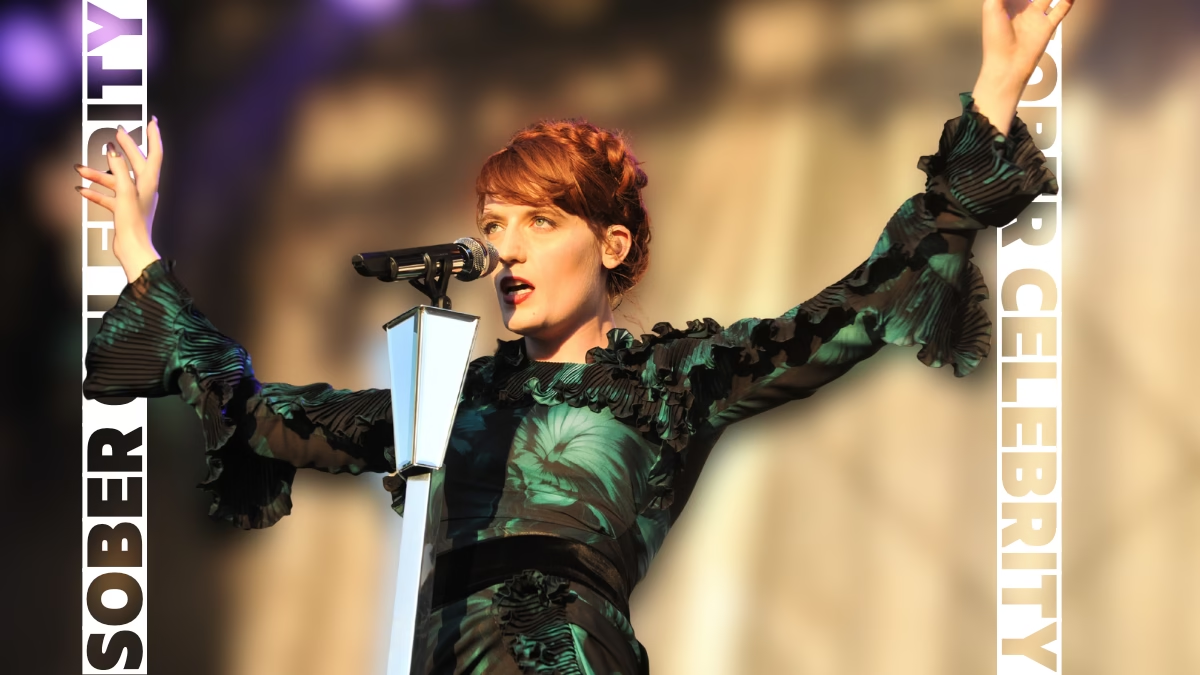

Florence Welch Is 12 Years Sober. She Describes Herself as an All-or-Nothing Drinker. Here’s the Full Story.
Florence Welch has one of the most recognizable voices in music. She also has one of the more honest answers to the question of why she stopped drinking.
She is, by her own description, all or nothing. Not the kind of person who has one glass of wine and calls it a night. The kind of person for whom one glass of wine is simply the beginning of a longer and less predictable evening.
She stopped drinking in 2014. As of 2026, that is 12 years. In that time, she released How Big, How Blue, How Beautiful, High as Hope, and Dance Fever, performed on some of the biggest stages in the world, got through a pandemic without picking the bottle back up, and gave a series of interviews about her sobriety that are more specific and more honest than most celebrities ever manage.
Sobriety Snapshot
| Sobriety Date | 2014 |
| Years Sober | 12 years (as of 2026) |
| Substance | Alcohol |
| Turning Point | Recognized she could not moderate and that drinking was consuming her life off-stage |
| Quote | “Sobriety is the best thing I’ve ever done.” |
Source: The Times
The Struggle: All or Nothing
The Ceremonials era — 2011 and 2012 — was the period when Florence + The Machine went from critically beloved to genuinely enormous. The album debuted at number one in the UK. The band played massive festival slots. Florence was everywhere.
She has since described those years as a time when the drinking and the spectacle were feeding each other. The shows were grand and overwhelming by design. The offstage life reflected that energy in ways that were harder to sustain.
She told The Times that she realized early she was an all-or-nothing drinker — someone who could not find the middle ground that makes social drinking manageable for other people. She has also spoken about struggling with her relationship with food and with body image during this period, and the way those struggles compounded each other.
She was not drinking to party. She was drinking to perform the version of herself that felt comfortable in front of that many people, and then drinking to come down afterward. The creative mythology of the rock star required certain props, and she had convinced herself they were structural.
The Turning Point: 2014
Florence stopped drinking in 2014. She has not described a single dramatic moment that made the decision for her. What she has described is a growing recognition that her life off-stage was not matching the person she wanted to be, and that alcohol was the reason.
She told The Guardian that getting sober felt like stepping out of a fog she had not realized she was standing in. The clarity was not comfortable at first. She had been using alcohol to get to a particular emotional place for performing, and learning to access that place without it took time.
What she found on the other side was that the emotional rawness she had associated with drinking was actually just her. The voice, the drama, the intensity — none of it required alcohol to function. It was already there. The drinking was obscuring it, not creating it.

The Recovery: Feeling Everything
Florence has been consistent about one thing across many years of interviews: sobriety means feeling everything. There is no numbing agent, no off switch, no buffer between her and whatever is happening. For someone who also dealt with an eating disorder and anxiety, that is not a small thing.
She has spoken about the early years of sobriety being a process of learning how to exist in her own nervous system without assistance. Performing sober was part of that process — going on stage in front of tens of thousands of people with nothing to take the edge off, and discovering that the edge was actually where the best work lived.
Her 2018 book Useless Magic, a collection of lyrics and poetry, was written entirely in sobriety. It is an unfiltered document of what her interior life looks like when it is not being mediated by alcohol. She has called writing it one of the most clarifying things she has done.
She leaned on community, on therapy, and on the people around her who understood what she was doing and why — and she did not try to do any of it alone.
The Pandemic Test: Missing the Brain Break
During the COVID-19 lockdowns, Florence Welch said publicly what a lot of people in long-term recovery were thinking but not necessarily saying out loud: she missed the brain break.
She has described alcohol as providing a specific kind of relief — the ability to switch the noise off, to stop processing for a few hours. Without touring, without the structure of a working life, without anything to occupy the parts of her brain that stay loud, the absence of that relief became more noticeable.
She did not relapse. She talked about the difficulty, reached for her support network, and got through it. But the honesty of naming that feeling publicly — the specific grief of missing a substance that was also hurting you — is something that does not get said often enough by people in the public eye. It is useful to hear it from someone 10 years into sobriety, because it normalizes the reality that recovery is ongoing rather than resolved.
Life After: Three Albums and Counting
The three albums Florence + The Machine released after her sobriety represent the bulk of her catalog and arguably some of her strongest work. How Big, How Blue, How Beautiful (2015) debuted at number one in the UK. High as Hope (2018) was more stripped back and personal than anything she had made before. Dance Fever (2022) was written during the pandemic and debuted at number one in the UK.
She has headlined Glastonbury. She stepped in for an injured Kendrick Lamar at Coachella in 2023 and played a full set with essentially no notice. The woman who thought she needed alcohol to perform has now done things sober that most performers would consider impossible under any circumstances.
She is 37 years old. She has said sobriety is the best thing she has ever done, and she has said it plainly, without qualifying it or couching it in inspirational language. That directness is what makes it land.
Sources and Further Reading
- Florence Welch on sobriety: The Times interview
- Florence Welch speaks to The Guardian about getting sober
- Useless Magic by Florence Welch (2018, Crown Archetype)
- Rolling Stone: Florence + The Machine’s Dance Fever review
- The Sober Curator: Sober Celebrity Spotlight
Up Close & Personal with Florence Welch
She thought she needed alcohol to be the artist she was. Twelve years later, the evidence is three number-one albums and a Coachella headline set she played on 24 hours notice. The all-or-nothing drinker chose nothing, and got everything.
PLAY IT AGAIN is The Sober Curator’s curated playlist of sobriety anthems—songs that capture the essence of recovery journeys and lift the spirit. From timeless classics to modern hits, these tracks inspire, heal, and motivate, no matter what genre of choice. Each song is handpicked for its power to transport you to another state of mind and remind you why living alcohol-free rocks.
Got a favorite sobriety theme song? We want to hear it! Send your picks to thesobercurator@gmail.com and help us keep the playlist growing.
THE MINDFUL BINGE: Daisy Jones & the Six Reflects the Beauty and Agony of Love, Art, Sobriety and Addiction
SOBERSCRIBE NOW!
Resources Are Available
If you or someone you know is experiencing difficulties surrounding alcoholism, addiction, or mental illness, please reach out and ask for help. People everywhere can and want to help; you just have to know where to look. And continue to look until you find what works for you. Click here for a list of regional and national resources.

Follow The Sober Curator on X, the artist formerly known as Twitter
How long has Florence Welch been sober?
Florence Welch stopped drinking in 2014. As of 2026, that is 12 years of sobriety.
What did Florence Welch struggle with?
She has spoken publicly about alcohol use, describing herself as an all-or-nothing drinker who could not moderate. She has also discussed struggles with her relationship with food and body image, and the way those issues intersected with her drinking during the early years of her career.
Why did Florence Welch get sober?
She has described a recognition that her life off-stage was not matching the person she wanted to be, and that alcohol was the reason. There was no single dramatic incident she has pointed to publicly. She identified the pattern and made the decision.
Did Florence Welch struggle with sobriety during the pandemic?
Yes, and she said so publicly. She described missing the “brain break” that alcohol provided during lockdown, when the usual structures of touring and work were gone. She did not relapse but was open about the difficulty, which she has said is part of being honest about what long-term recovery actually looks like.
Has Florence Welch written about sobriety?
Her 2018 book Useless Magic, a collection of song lyrics and personal writing, was created entirely in sobriety and reflects on her inner life with considerable honesty. Several of her songs from post-2014 albums address themes of recovery, grief, and the work of being present without numbing.
Does Florence Welch talk about sobriety publicly?
Yes. She has discussed it in interviews with The Times, The Guardian, and other publications over the years. She is consistent in describing sobriety as the best decision she has made and specific in her account of what the early years were like and what the ongoing challenges look like.
