



My first night in Shipshewana, Indiana, I went out for a walk to catch the last traces of the sunset. It was the end of April and twilight lingered late. The sky was a bruise blue as the fading light glowed over fields and barns. The town’s main street was quiet before nine o’clock, with only a few people out and the shops closed. Then a resounding clip clop echoed off the pavement in this flat landscape. The sound bounced all around me in the darkness until a black buggy came into view, pulled by a horse with a businesslike trot.
During my three days in Amish country in northeast Indiana, I got more accustomed to that clip clop sound. But it continued to thrill me with the mystery of a life lived so differently. Indiana’s northeastern corner gives visitors a peek into this separate culture living right next door in parts of the US.
Amish 101
The Amish are a conservative Christian sect that trace their roots to the Anabaptist movement in Switzerland in 1525, the time of the Protestant Reformation. Anabaptists believed in adult baptism—when people made a conscious choice to join the church—rather than infant baptism.
Today, the American Amish population is most concentrated in Ohio, Pennsylvania and Indiana. They aim to live simple lives separate from the mainstream.
I was especially interested in visiting Shipshewana because it’s that very rare thing: a dry town. While alcohol is served in the surrounding parts of LaGrange County, it’s banned within Shipshewana’s city limits.
The Amish church is as decentralized as AA. Communities divide into districts of 25 to 35 families, each led by a male bishop. The bishop leads his congregation in setting rules, which can vary substantially between districts. These rules could cover things like what sorts of technology are acceptable or not, and even influence dental care. Many districts favor extraction and dentures over high-cost repairs, which could indicate vanity.

Many Amish people don’t drink alcohol at all. Some drink in their homes. But you probably won’t see any Amish drinking in public, unless they’re teenagers during Rumspringa. This is the time when young people have a chance to experience worldly things like driving cars, wearing store-bought clothing and getting a bit wild before ultimately choosing whether or not to be baptized and rejoin the Amish fold.
It’s very confusing as an English person—that’s what Amish people call the non-Amish—to grasp the culture during a brief visit to Shipshewana. Some things are obvious, like driving a buggy instead of a car and wearing a shapeless dress and bonnet rather than something chic. But other issues are more nuanced. For example, the Amish aren’t necessarily against electricity so much as being attached to a power grid. I met an Amish furniture maker who ran his power tools with a generator.
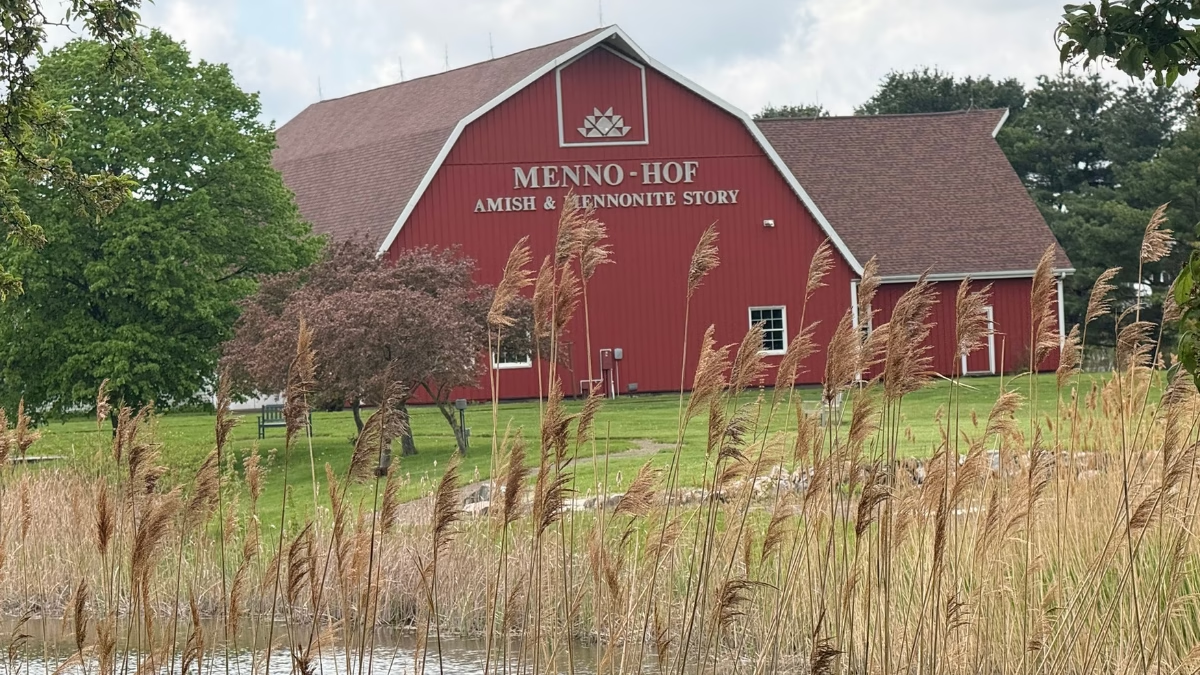
I visited Menno-Hof, a nonprofit museum inside a house and big red barn, to learn more about lives of the Amish and related religions. Its exhibits and short films provide a crash course in the history of and differences between Anabaptist sects—Amish, Mennonites and Hutterites. A tour guide will take you through in about an hour and 15 minutes. I had to take the abridged tour because of limited time, but could easily have spent two hours in there.

Amish shopping
Despite being simple people, the Amish love to shop and wheel and deal. My first morning in Shipshewana, I went to the weekly Wednesday auction at Shipshewana Trading Place. My group of travel media attended a short intro to auctions session before getting turned loose—and into trouble—on the auction floor.
“Every week that barn is completely different,” Lora Gates, marketing director for Shipshewana Trading Place, told us. “Every Tuesday, sellers come in, they set up the whole barn. You’ll see how large it is. By the end of the day, Wednesday, that barn is swept out.” The auction started in 1922 and is still run as a family business. Both sellers and bidders come from all over the Midwest and the Eastern US.
I was pretty excited to get into that barn and take a look around. But first, we stopped off in the office to get bidder numbers. Then we were free to roam around and look at the different areas set up inside like a swap meet. Merchandise ranged from beautiful glassware to rusty junk. My favorite lot was the contents of an abandoned Odd Fellows lodge. This fraternal organization’s initiation rites included elaborate costumes, velvet thrones, and coffins with fake skeletons inside! But try shipping that from Indiana to Portland, Oregon.
We arrived right before the official bell rang at nine AM, setting the auctioneers into their fast talking. About six auctions happen at once, each with an auctioneer and a clerk to jot down who’s buying what. Being an auction newbie, I could not keep up. I wasn’t sure if the price was 40, 140 or 340. At one point I realized I was holding my bidding number in the same hand that I was lifting up to snap photos with my phone. I quit that in a hurry.
Later, we visited a store called Glick’s Lawn Furniture and glimpsed where some of this auction stuff ends up. “So it started out about 30 years ago. I was just probably about that tall,” Jason Glick says, indicating the height of a six-year-old while we stand amidst an incredible array of lawn furniture, old buggies, bins and piles of mysterious treasures. Or maybe junk. “We started going to a few auctions here and there, something that my dad and I kind of enjoyed. And we’d buy a few things, bring it back and put it in the store. It’s been growing ever since that.” I also found a thrift store where you can buy used Amish dresses and bonnets.
Since Amish avoid birth control, generally leaving family planning to God, families skew large. And so do the shopping trips. Glen Bontrager gave us a tour of E&S Sales Bulk Foods, the Amish answer to Costco. Glen proudly shared E&S annual stats: 30,000 whoopie pies, 42,000 cookies, 221,000 pounds of dried noodles, 37,000 loaves of bread and 14,000 pizzas. When Glen first started at E&S, they did mail order with people sending cash or checks through the mail. “Ninety percent of all the letters that I got had blank checks in them,” he said. He’d process the order, add shipping, and fill in the total. Now that’s a trusted business! My favorite thing at E&S was the biggest selection of colored sugar I’ve ever seen.
I’ve saved perhaps the best shopping for last: the phenomenally huge flea market. It runs May through September. I was in Shipshewana a week too early. Otherwise, I might still be there.
Amish entertainment
One of the more unusual things I encountered in Shipshewana was a musical theater company specializing in plays about Amish people. Local entrepreneur Mel Riegsecker started out making and selling miniature horse drawn buggies in 1980. He added an ice cream stand for his customers, then a restaurant. He kept expanding his vision and offerings. Folks needed a place to sleep, so he opened Blue Gate Garden Inn, the very comfortable hotel where I stayed. And they needed something to do at night, so he built a couple of venues—one focused on music, and one on theater.
Andy Rohrer, VP of sales and marketing for Blue Gate Hospitality, said of Mel, “He got approached by a gentleman from Nashville who said, ‘Hey, Mel, we found this article in the New York Times about how people aren’t buying books anymore. Except in one genre: Amish fiction.’ That was the only genre that was growing.” And so Riegsecker started getting Amish novels adapted into musicals. The one we saw, “A Simple Sanctuary,” was about a woman who gets in trouble with criminals and hides out at an Amish B&B. I enjoyed my first foray into Amish-themed musical theater. One of my colleagues complained it was hokey, and okay, it was, but it was fun and they could really sing.
Outdoor recreation
The area around Shipshewana is very pretty, mostly flat, farmland. It looks like a nice place for biking. I, however, am always seeking water. So I headed toward nearby Mongo, Indiana to kayak on the Pigeon River.
Andy Linder owns Trading Post Outfitters in Mongo. He and his wife Jess left the big city of Indianapolis to raise their kids a woodsier way. Now they run a campground, general store, and river trips.
What’s so special about this corner of northeastern Indiana? “It’s in the middle of the Pigeon River Fish & Wildlife Area,” Andy said. “So we have 12,000 acres surrounding our river.” You’ll hardly see a house in the 26 miles of river his company kayaks. “Everything else is pure woods, pure nature. Blue herons, sandhill cranes, deer, bald eagles, osprey.” And lots of cute little turtles.
We did a four-mile trip. The water was high and fast since it was early in the season, so it was very easy. We tried not to paddle too much lest the trip be over in a blink. It’s amazing that there’s such a forested area so close to the farmland around Shipshewana. “As far as the Midwest goes, this is about the most serene river experience you can get,” Andy said.
It’s a peaceful area. The Amish people have their separate culture, but they are hospitable to outsiders. It was a fun trip where nothing centered on alcohol.
SOBER RETREATS: with Senior Travel Sober Curator Contributor Teresa Bergen is your go-to space for alcohol-free travel tips, insider guides, and honest reviews from a sober perspective. Teresa blends her passions—animals, wildlife conservation, sustainability, geography, culture, outdoor adventure, and yoga—into enriching travel stories that inspire mindful exploration. From kayaking and hiking to visiting historic cemeteries and sacred spaces, she uncovers the beauty where history, art, and spirituality meet.
🏝️ Submit a Sober Retreat Recovery-focused, wellness, spiritual, creative, and adventure retreats. Listings start free. Featured and Sponsored placements available for retreats that want full editorial coverage. Submit your retreat →
WHAT A TRIP! 26 Airports with Alcohol-Free Calm Spaces That Support Sober and Neurodivergent Travelers
Welcome to HAPPY EVERY HOUR, your go-to hub for all things NA (non-alcoholic). We review alcohol-free beers, ciders, wines, spirits, RTDs (ready-to-drink), and share NA cocktail recipes that taste just as good—if not better—than the boozy originals. Whether you’re sober, sober-curious, or just taking a break, this is where great taste meets zero proof.
TRIGGER WARNING: People in early sobriety may want to proceed with caution. Always read labels. Please hydrate responsibly … #becausedrunkneverlooksgood.
🛍️ Submit a Product for Review NA beverages, sober-friendly tools, alcohol-free brands, and products built for the way our audience actually lives. Submit your product →
God, grant us the serenity to #ADDTOCART! Sober retail therapy is our favorite kind of workout—mindful, fun, and community-focused. In this section, you’ll discover unique sobriety gifts, premium recovery swag, and must-have merch we can’t stop raving about. We love featuring small businesses founded by people in recovery, sober creators, and brands that champion mental health and the sober lifestyle. From #QUITLIT reads to stylish glassware and meaningful recovery keepsakes, our curated picks make every purchase a celebration of sober living.
Shop our classic Sober Curator merch on SHOPTHESOBERCURATOR.COM for and explore our TSC Amazon Storefront featuring curated lists packed with gifts, books, and sober essentials.
🛍️ Submit a Product for Review NA beverages, sober-friendly tools, alcohol-free brands, and products built for the way our audience actually lives. Submit your product →
Resources Are Available
If you or someone you know is experiencing difficulties surrounding alcoholism, addiction, or mental illness, please reach out and ask for help. People everywhere can and want to help; you just have to know where to look. And continue to look until you find what works for you. Click here for a list of regional and national resources.

Follow The Sober Curator on Facebook
Is Shipshewana, Indiana a dry town?
Yes. Shipshewana is a rare dry town, meaning alcohol is banned within the town’s city limits. Alcohol may be available in other parts of LaGrange County, but Shipshewana itself offers visitors a travel experience that does not center around drinking.
Where is Shipshewana located?
Shipshewana is located in northeastern Indiana, in the heart of Amish country. The area is known for its horse-drawn buggies, Amish-owned businesses, farmland, auctions, flea markets, and access to nearby outdoor recreation.
What can you do in Shipshewana, Indiana?
Visitors to Shipshewana can explore Amish culture at Menno-Hof, attend the weekly auction at Shipshewana Trading Place, shop at E&S Sales Bulk Foods, visit local stores like Glick’s Lawn Furniture, enjoy Amish-themed musical theater, browse the seasonal flea market, and take a nearby kayak trip on the Pigeon River.
Is Shipshewana a good destination for sober travelers?
Yes. Shipshewana is a strong destination for sober travelers because the town itself is dry and many activities are centered around culture, shopping, food, history, theater, and outdoor recreation rather than alcohol. It is a peaceful option for travelers looking for an alcohol-free getaway.
What is Menno-Hof in Shipshewana?
Menno-Hof is a nonprofit museum in Shipshewana that teaches visitors about the history, beliefs, and differences between Amish, Mennonite, and Hutterite communities. It offers exhibits, short films, and guided tours for people who want a better understanding of Anabaptist culture.
When is the Shipshewana flea market open?
The Shipshewana flea market typically runs from May through September. It is one of the area’s biggest attractions and is known for its large selection of vendors, antiques, handmade goods, food, and unique finds.
Can you kayak near Shipshewana?
Yes. Travelers can kayak near Shipshewana on the Pigeon River, especially through outfitters in nearby Mongo, Indiana. The area around the river includes wooded scenery, wildlife, and a peaceful contrast to the surrounding farmland.
