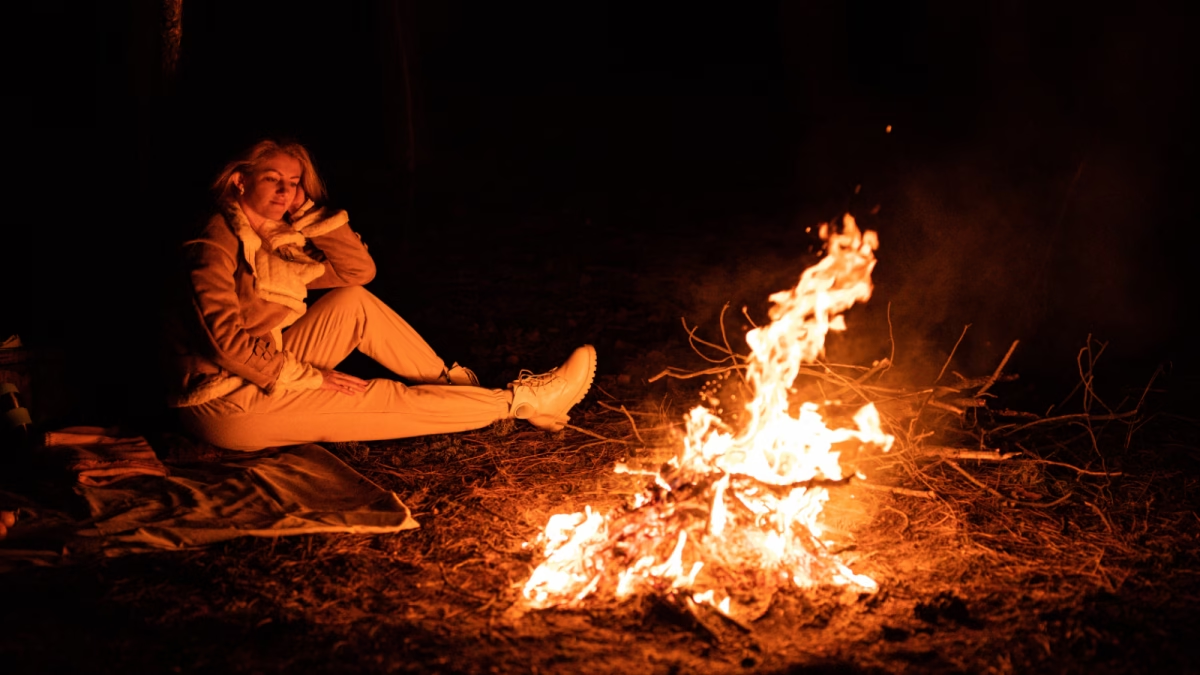
Every year around Bealtaine (pronounced BYAL-tin-uh), I find myself thinking differently about fire. As late spring settles in and the temperatures begin to climb, a certain kind of fire starts appearing everywhere. Backyard fire pits surrounded by Adirondack chairs. Beach bonfires with somebody passing around hard seltzers from a dented metal tub packed with ice. Twinkle lights strung across fences. Golden skin glowing in alcohol ads designed to make intoxication look effortless and beautiful. Social media fills with smoked cocktails, oversized sweaters pulled over bare legs, and groups of friends laughing into the night beside perfectly contained flames.
This is not the fire I’m talking about.
I mean older fire. Ancient fire. The fires that once gathered around because it marked survival, protection, transition, and community.
Bealtaine, the Celtic fire festival that welcomes the beginning of May, was historically marked by great communal fires lit across Ireland and Scotland. Cattle were guided between twin flames before being brought into summer pasture as a form of blessing and protection. Hearth fires were extinguished and relit from a shared village flame. Fire carried meaning and responsibility. It carried the hope that people and animals alike might pass safely into a new season.
I think about that often in relation to recovery because so many of us arrive here carrying bodies that already know fire intimately.
For years, I mistook intensity for aliveness. My nervous system responded to urgency like a dog hearing its owner’s car pull into the driveway. I knew how to live inside anticipation, emotional volatility, overthinking, exhaustion, late-night spirals, and the strange intimacy that forms when people unravel together under dim bar lights or through endless text messages sent after midnight. Even after I stopped drinking, I still reached for heat everywhere. I wanted transformation to arrive dramatically. I wanted healing to feel cinematic. I wanted my life to crack open all at once.
Instead, recovery often introduced itself through deeply ordinary moments that felt almost unbearably quiet at first.
I remember one evening in early sobriety standing in my kitchen making pasta while Adele played in the background and the old radiator in my apartment knocked and hissed against the wall. Nobody was texting me. Nobody needed rescuing. There was no emotional cliff edge waiting for me before bedtime. I felt restless in a way I could barely explain. I understand now that my body had spent years adapting itself to chaos. Without the familiar surge of adrenaline and emotional whiplash, calm initially registered as emptiness.
Some bodies become so accustomed to wildfire that steady warmth feels difficult to recognize.
Recovery has slowly changed my understanding of heat. As I’ve leaned more deeply into aligning my living, which includes my recovery, with the Celtic calendar and its older rhythms of ritual, community, season, and relationship with the land, I’ve started paying attention differently. I notice the kinds of warmth that sustain a life over time rather than simply flare bright for a moment. The lamp beside my chair during early mornings. The oven warming the kitchen while a berry cake sinks slightly in the middle because I insisted on using frozen fruit anyway. The candle I light before Wednesday recovery calls while people slowly enter the Zoom room from living rooms, parked cars, back porches, and quiet bedrooms across the country. The heat held in a mug of tea. The warmth of somebody remembering a hard thing you said three weeks ago and asking how you are doing with it now.
I think about the people in my recovery spaces often. The woman whose laugh comes from so deep in her body that everybody else instinctively softens when they hear it. The person who logs onto a coaching call wrapped in the same faded green blanket every single week. The community member who always arrives sharing about her garden and what she planted this week.
This, too, feels connected to Bealtaine for me. Fire was never only about destruction. It was also about tending. Gathering. Protection. Continuance. Somebody had to keep the flame alive long enough for others to carry it home.
I think many of us come into recovery believing we must either extinguish ourselves completely or stay trapped inside the blaze. It can take time to understand there are other ways to live. A hearth fire warms a home differently than a forest fire tears through it. One leaves people fed and sheltered. One leaves ash.
There are still moments when I miss the old intensity. I miss the sharp chemical feeling of urgency. I miss how dramatic life could feel when every emotion arrived at full volume. But then I think about settling back into my life and just washing dishes after a support call. Or leaving a friend’s house carrying leftover brownies wrapped in foil while the air smells like rain on hot pavement. I think about opening my kitchen window early in the morning and hearing the alley birds screaming at each other while the kettle heats up. I think about friendships that no longer leave me emotionally singed for days afterward. I think about how beautiful it feels to build a life that does not require me to constantly recover from it.
Maybe that is part of the wisdom inside Bealtaine. People gathered around the fire together because survival has always been communal. Somebody brought wood. Somebody watched the flames. Somebody made sure the fire held through the night. Somebody carried the embers home carefully.
I do not think healing asks us to become colder people. I think it asks us to become steadier ones. People who know how to tend warmth with care. People who can recognize the difference between a fire that gathers people close and a fire that consumes everything in its path.
The body keeps the bonfire for a long time. Recovery, at least for me, has been the slow and sacred work of learning which flames are worth feeding.
Anne Marie hosts a recovery support call every Wednesday from 8-9 pm ET. You can find out more HERE.

THIRSTY FOR WONDER: at The Sober Curator, led by Anne Marie Cribben—a passionate recovery coach and spiritual companion based in Washington, DC—offers 1:1 coaching, spiritual guidance, and recovery support rooted in compassion and empowerment. As the creator of The Wellspring: A Celtic Recovery Journey, Anne Marie blends the Celtic calendar with sobriety, connecting participants to ancient wisdom and the rhythms of nature.
A fierce advocate for sobriety as liberation and self-love, she challenges the targeted marketing of alcohol to women and champions authentic, joyful living. Her work goes beyond addiction recovery, fostering a life of vibrancy, purpose, and connection.

Resources Are Available
If you or someone you know is experiencing difficulties surrounding alcoholism, addiction, or mental illness, please reach out and ask for help. People everywhere can and want to help; you just have to know where to look. And continue to look until you find what works for you. Click here for a list of regional and national resources.

Follow The Sober Curator on Facebook
What is Bealtaine?
Bealtaine, pronounced BYAL-tin-uh, is a Celtic fire festival traditionally celebrated at the beginning of May. Historically, it marked the transition into summer and was associated with fire, protection, fertility, community, and seasonal renewal.
How does Bealtaine connect to recovery?
Bealtaine connects to recovery through its themes of fire, transition, protection, and community. In this reflection, fire becomes a metaphor for learning the difference between destructive intensity and the steady warmth that supports healing.
What does “the body keeps the bonfire” mean?
“The body keeps the bonfire” suggests that the body remembers intensity, chaos, trauma, urgency, and emotional heat long after the external situation has changed. In recovery, healing can involve learning which forms of fire are worth tending and which ones are no longer safe to feed.
Why can calm feel uncomfortable in early sobriety?
Calm can feel uncomfortable in early sobriety because the nervous system may have adapted to chaos, adrenaline, urgency, or emotional volatility. Without familiar intensity, peace may initially register as boredom, emptiness, or restlessness.
What is the difference between wildfire and hearth fire in recovery?
In this piece, wildfire represents chaos, urgency, emotional volatility, and patterns that consume. Hearth fire represents steady warmth, safety, community, nourishment, and the kind of healing that can be tended over time.
Why is community important in recovery?
Community is important in recovery because healing is not meant to happen in isolation. Like the communal fires of Bealtaine, recovery spaces can offer warmth, accountability, protection, remembrance, and support.
How can ritual support sobriety?
Ritual can support sobriety by creating rhythm, meaning, and grounding. Simple practices like lighting a candle, joining a weekly recovery call, making tea, observing seasonal shifts, or gathering with supportive people can help create steadiness.
What does nervous system healing have to do with recovery?
Nervous system healing is often part of recovery because many people are learning how to live without constant stress, emotional whiplash, numbing, or adrenaline. Recovery can help the body relearn safety, calm, presence, and steady connection.
Is healing supposed to feel dramatic?
Not always. Healing often happens through ordinary, quiet moments: making dinner, washing dishes, showing up to a support call, drinking tea, resting, or having a friendship that no longer leaves you emotionally exhausted.
What does it mean to feed the right flames?
Feeding the right flames means choosing the people, practices, rituals, relationships, and forms of warmth that sustain your life instead of consuming it. In recovery, that may mean choosing steadiness over chaos and connection over intensity.