



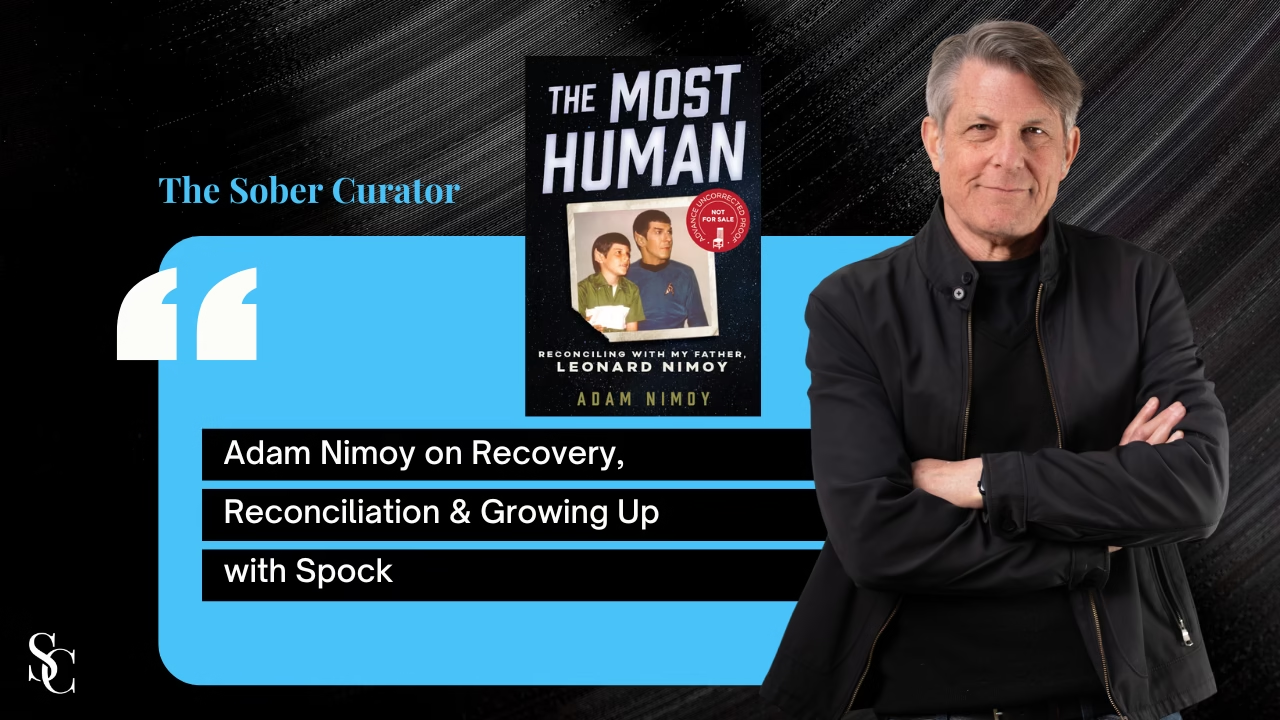
There’s a moment in the conversation when Adam Nimoy says something so simple, so clean, so spiritually efficient that everything else seems to orbit around it:
“You can be right, or you can be happy.”
It lands with that unmistakable click of truth — the kind you don’t just hear, but feel. And in many ways, it’s the heartbeat of Adam’s entire story: the years of tension with his father, the decades of medicating uncomfortable emotions, the slow, stubborn climb toward emotional maturity, and the radical work of reconciliation.
But to understand the wisdom, you have to understand the wreckage — and the rebuilding.
Growing Up in the Shadow of a Legend
Adam Nimoy grew up in a house where the head of the table wasn’t just a father — he was an icon. Leonard Nimoy, known to millions as Spock, was disciplined, driven, and consumed by a career that shaped science fiction and pop culture forever. But being raised by a legend doesn’t exempt anyone from human complications.
“Leonard was a tough cookie,” Adam shares, explaining that his father’s emotional distance and authoritative style left lasting imprints. It wasn’t abuse. It was something more subtle: the persistent ache of not quite being seen.
And like many of us raised by complicated parents, Adam internalized that ache and learned to numb it.
Thirty Years of Wake-and-Bake
For three decades, Adam smoked weed daily — a soothing escape that carved a groove into his life. “It gets old,” he says quietly. “After 30 years of daily wake and baking, it just starts to get very old.”
His decision to stop using wasn’t dramatic; it was a phone call. A friend in rehab told him, “It’s your turn.” And something in him finally said… yes.
He smoked his last bowl on December 18, 2003, drank his last glass of champagne on New Year’s Eve, and walked into 2004 sober.
No rehab. No crash. Just a quiet conviction that the life he’d built wasn’t the life he wanted.
Recovery Isn’t Just for Addicts
One of the most powerful threads of Adam’s story is his belief that recovery is universal.
“Everybody is recovering from something,” he says. “A failed marriage, a career collapse, grief, physical illness — everyone is in some form of recovery.”
It’s a radical reframe. Sobriety isn’t an exclusive club; it’s a language for being human.
Acceptance vs. Approval: The Turning Point
Adam didn’t just get sober — he got emotionally sober. And that required him to rethink everything he believed about his father.
“Acceptance is not approval,” he says, echoing an Al-Anon gem. “I needed to accept my dad for who he was without trying to educate, modify, or rehab him.”
It wasn’t about giving Leonard a pass. It was about letting go of the fantasy that the past could be rewritten.
And the minute Adam stopped needing to be right, he discovered something extraordinary:
He could finally be close to his father.
Living Amends & Unexpected Healing
One of the most moving parts of Adam’s story is the idea of living amends — the quiet, consistent actions that communicate love where words fail.
Leonard Nimoy never sat across from his son and formally worked Step Nine. But when Adam’s wife became terminally ill, Leonard showed up every day. He brought food. He listened. He drove him to Shabbat services. He became, for the first time, the father Adam always needed.
A rabbi helped him see what was happening:
“This is your father’s amends.”
And it changed everything.
The Amends That Opened the Door
Years earlier, during a period of estrangement, Leonard sent Adam a seven-page letter detailing years of resentment. Instead of reacting (a miracle of restraint), Adam brought the letter to a trusted friend, who told him something wild:
“He’s done your fourth step for you. All you have to do is make the amends.”
Adam resisted. Then surrendered. And the amends he made that day opened the door that allowed both men to walk back into each other’s lives.
Within a week, Leonard invited him to Shabbat dinner. A new chapter began.
No Regrets
When Leonard Nimoy died, Adam felt something many people long for but never reach:
No regret.
No unfinished business.
No lingering resentment.
They had done the work. They had done it right.
And that is the gift recovery gave him — not perfection, but peace.

Becoming “The Most Human”
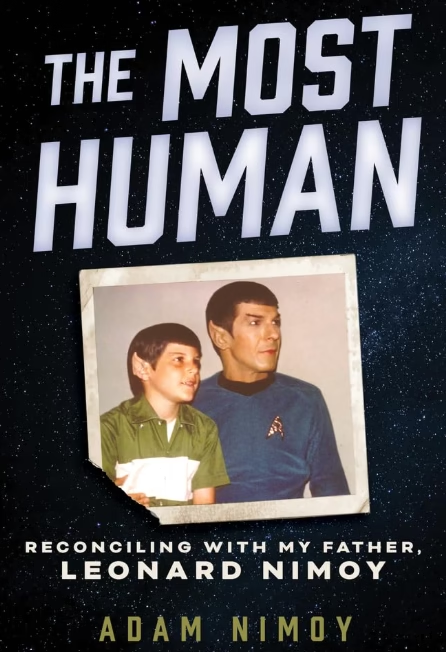
Adam’s book, The Most Human, is not a celebrity memoir. It’s a spiritual scrapbook — equal parts love letter, reckoning, and redemption arc. It’s the story of a man who learned to see his father not as a giant, but as a human being. And in doing so, he became more human himself.
Why This Conversation Matters
We all have a Leonard.
A person whose approval we chase, whose absence we feel, whose flaws shaped us, whose love we may not fully understand.
And Adam’s story reminds us:
- We don’t have to wait for someone else to change.
- Healing is possible even without perfect apologies.
- Emotional maturity is a superpower.
- And sometimes the most courageous thing we can do is to soften.
His journey is proof that sobriety — in all its messy, miraculous forms — doesn’t just save lives.
It restores them.
🎧 Listen to Episode 42 of The Sober Curator Podcast for the full conversation.
Resources from this episode:
- fortheloveofspock.com documentary
- #ADDTOCART: The Most Human: Reconciling with My Father, Leonard Nimoy
- Beit T’Shuvah


Getting sober is one thing—but staying sober? That’s where the real adventure begins.
This show is for you if you’ve ever wondered:
– Where can I find inspiring sober podcasts, apps, and creators?
– How do I give back or stay plugged into the sober community
– What are the best sober-friendly drinks and travel tips?
– Where do I find the good NA drinks that don’t taste like regret?
The Sober Curator is your go-to for sober pop culture, booze-free travel, apps, creators, and community.
We’re not here to help you get sober.
We’re here to help you live sober—and love it.
Adam Nimoy grew up in the orbit of an icon — but his real journey was learning how to break cycles, heal resentment, and build a relationship with his father, Leonard Nimoy, that felt human rather than legendary. In this deeply honest conversation, Adam shares his path from decades of daily “wake-and-bake” to long-term sobriety, the emotional maturity he fought hard to earn, and the radical power of living amends. From Al-Anon wisdom to Hollywood weirdness to the spiritual humor woven through recovery, Adam proves that even in the shadow of Spock, you can find your own logic — and your own freedom.
Takeaways:
Emotional maturity is a learnable skill — and often the key to breaking generational patterns.
Recovery isn’t just for addicts; everyone is recovering from something.
Living amends can heal relationships where words fall short.
Acceptance ≠ approval — a vital distinction Adam learned through Al-Anon.
The people who challenge us most often become our greatest teachers.
Key Timestamps:
[00:00] Adam on reconciling with his father — “no regrets” at Leonard’s passing.
[03:00] His decision to quit weed after 30 years of daily use.
[06:00] “Everyone is in recovery from something” — why recovery tools apply to all.
[08:00] Acceptance vs. approval — the secret to surviving complicated parents.
[14:30] Writing The Most Human and telling the full story of reconciliation.
[18:00] Leonard’s “living amends” during Adam’s wife's cancer battle.
Resources & Links:
Adam Nimoy — Author of The Most Human
For the Love of Spock (2016 Documentary) https://fortheloveofspock.com/
Beit T’Shuvah (Residential treatment & spiritual community referenced)
–Alcohol + Substance Use Disorder Guide
–Recovery Nonprofit Resource Guide
–LBGTQ+ Recovery Resource Guide
Connect with Us:
-Website: www.thesobercurator.com
-Facebook: @The Sober Curator
-Instagram: @thesobercurator
-X: @thesobercurator
-YouTube: @thesobercurator
-Pinterest: @thesobercurator
Follow & Subscribe:
If you enjoyed this episode, please consider leaving a review on Apple Podcasts or Spotify. Your feedback helps us improve and reach more listeners. Plus, the first 50 reviews on Apple Podcasts can win a sleek, limited edition Sober Curator fanny pack!
Send Feedback:
If you have a story, feedback, or just want to connect, email us at thesobercurator@gmail.com. We’d love to hear from you!
About:
Sobriety isn’t the end of the party—it’s just the start of a better one. Hosted by Alysse Bryson, media powerhouse and sobriety’s ultimate hype woman, and joined by Sober Curator contributors, The Sober Curator Podcast* delivers bold convos, pop culture deep dives, and zero-proof living that doesn’t suck. Whether you're sober, sober-curious, or just looking for good vibes without the hangover, we’ve got you covered. Subscribe now—because getting sober matters, staying sober matters more.
*The Sober Curator Podcast is a space for open and honest conversations about sobriety, recovery, and alcohol-free living. While we celebrate all paths to a sober lifestyle, some topics discussed may be sensitive or triggering for certain listeners. This podcast is for informational and entertainment purposes only and is not a substitute for professional advice. If you’re in recovery or exploring sobriety, please take care while listening and seek support from trusted professionals as needed.

🔗TSC Podcast on Apple Podcasts
🔗TSC Podcast on Spotify Podcasts – 👀WATCH THE SHOW! 📺
🔗 TSC Podcast on YouTube – 👀WATCH THE SHOW! 📺

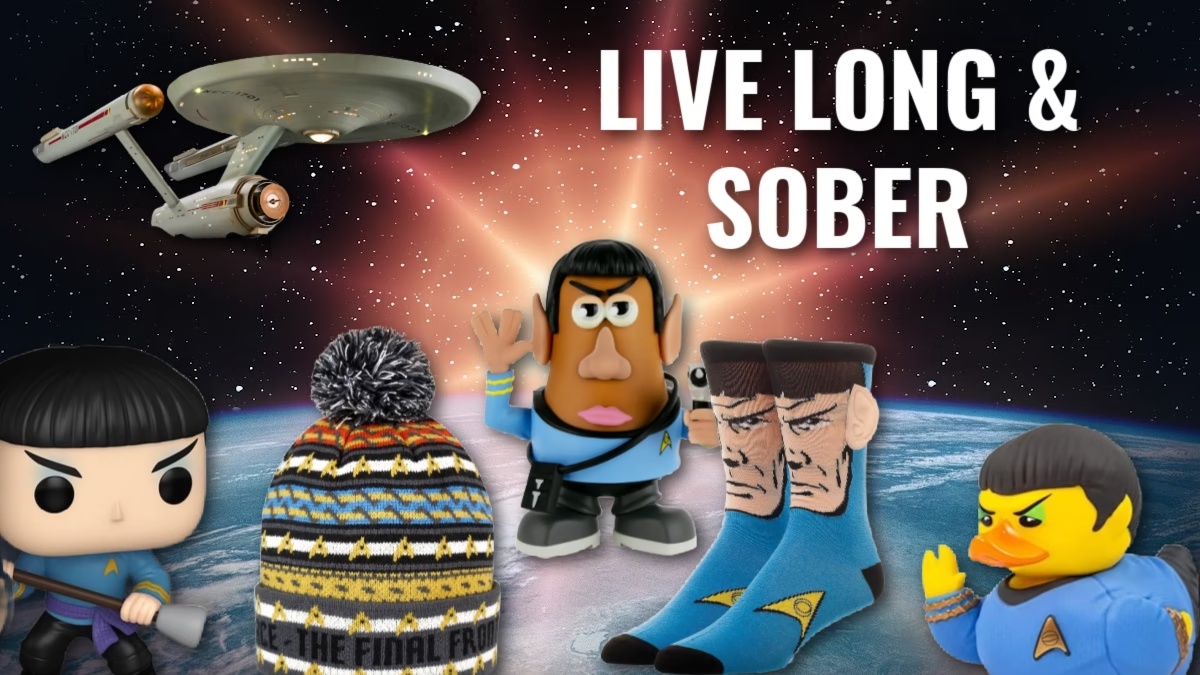
#ADDTOCART: A Curated Idea List of Pop Culture Merch for the Sober Trekkies in Your Life
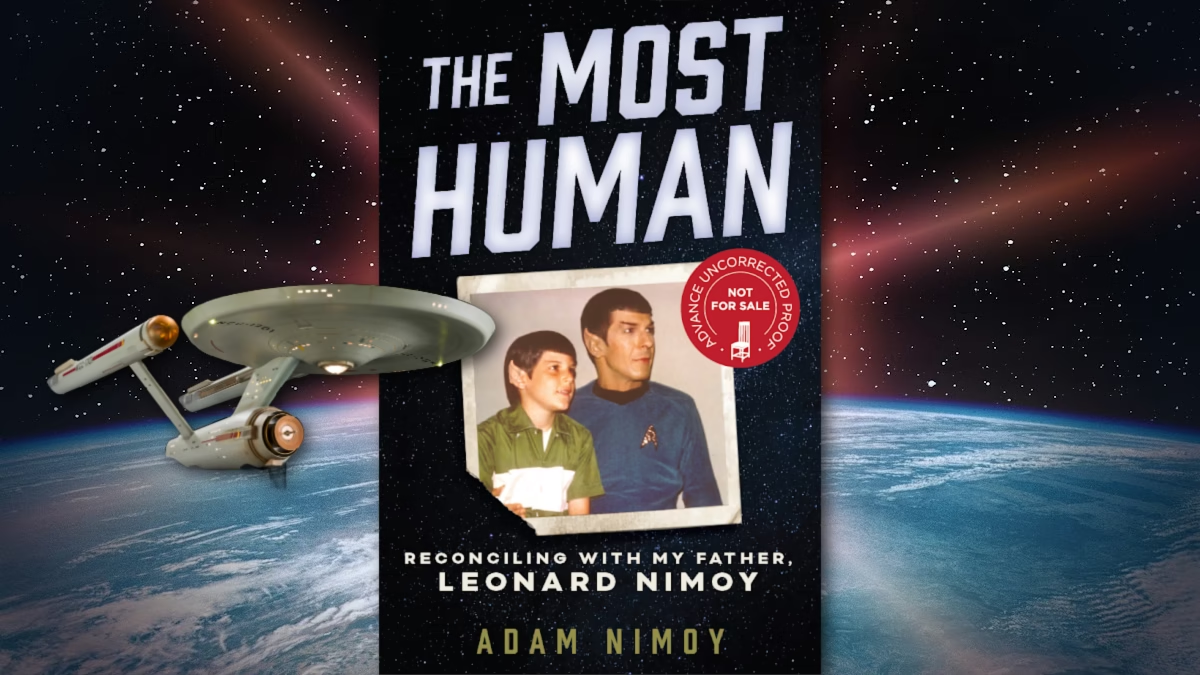
#QUITLIT: “The Most Human” by Adam Nimoy Review: A Raw Memoir of Addiction, Amends, and Healing

SOBER POP CULTURE + CELEBS at The Sober Curator is where mainstream trends meet the vibrant world of sobriety. We serve up a mix of movie, podcast, fashion, and book recommendations alongside alcohol-free cocktails, celebrity features, and pop culture buzz—all with a sober twist.
We’re here to shatter the “sobriety is boring” myth with a mash-up of 80s neon, 90s hip-hop edge, early 2000s bling, and today’s hottest trends. From celebrity shoutouts to red-carpet style inspo, this is where sober is as chic as it is fun. To the celebs using their platform for good—our Sober Pop Trucker hats are off to you!

“May the Sober Force Be With You” is a special Star Wars-themed landing page on The Sober Curator that blends sober pop culture with a galaxy far, far away. Created for fellow Jedi in recovery (and anyone who loves the saga), it draws playful yet meaningful parallels between the hero’s journey in Star Wars and the path to sobriety. From Yoda-fied 12 Steps to clever sobriety milestone titles, it’s a fun, creative way to celebrate a sober lifestyle while geeking out over one of the most beloved franchises in film history. Whether you’re a Padawan just starting out or a Jedi Master in long-term recovery, this page invites you to see your journey as an epic adventure—lightsaber optional.

TSC LIBRARY: Welcome to The Sober Curator Library! This isn’t your average stack of books—we’re talking full-on story immersion, Audible binges, and reviews with personality. Browse our four go-to genres: #QUITLIT, Addiction Fiction, Self-Help, and NA Recipe Books. And if you’re collecting recovery reads like rare trading cards, check out our Amazon #QUITLIT list—almost 400 titles ready for your TBR. Grab your backpack, book nerd. We’re on a quest to read every last one.


Resources Are Available
If you or someone you know is experiencing difficulties surrounding alcoholism, addiction, or mental illness, please reach out and ask for help. People everywhere can and want to help; you just have to know where to look. And continue to look until you find what works for you. Click here for a list of regional and national resources.

